Apollo.io is a strong fit for sales teams that want prospect data and outbound execution in one place. Its appeal is practical: an SDR can find a buyer, request contact details, enroll that person in a sequence, call, and sync the activity to a CRM without assembling a separate tool for every step. The trade-off is that the seat price is only part of the purchase decision. Data coverage, credits, mailbox health, CRM rules, and field readiness determine whether the workflow creates useful pipeline.
This Apollo review evaluates the platform as a go-to-market operating system, not simply a database. We'll assess prospecting, outreach, pricing, CRM governance, and the handoff from product marketing to SDRs and account executives. We've reviewed Apollo's published product and support documentation, recent independent coverage, and public user feedback. We didn't purchase a subscription, conduct a controlled contact-accuracy test, or claim that vendor performance promises are independently proven.
- Best fit: a small or midsize outbound team that wants prospecting data, sequences, and CRM sync together.
- Main advantage: contact discovery and sales engagement share one workflow instead of requiring multiple handoffs.
- Main risk: credit consumption and contact quality vary by workflow and target segment, so test your own ICP.
- Buying advice: validate email, phone, and CRM outcomes before committing to an annual contract.
What is Apollo.io, and what does it actually replace?
Apollo combines B2B contact discovery, enrichment, outbound sequences, calling, and CRM connectivity. Its product pages describe a data network and an engagement layer that can act on that data. That combination makes it a reasonable candidate to replace a lightweight contact finder plus a basic sequencing tool. It doesn't automatically replace a CRM, a mature revenue-intelligence system, or the organizational process that approves product claims and sales messaging.
The distinction matters during procurement. A sales manager may ask whether reps can send more emails. A GTM lead should instead ask whether a rep can identify an approved target account, use the correct message, reach a valid contact, and leave the next owner a complete record. Apollo addresses several execution steps. Message approval, launch training, and evidence that every rep understood a release remain separate management tasks.
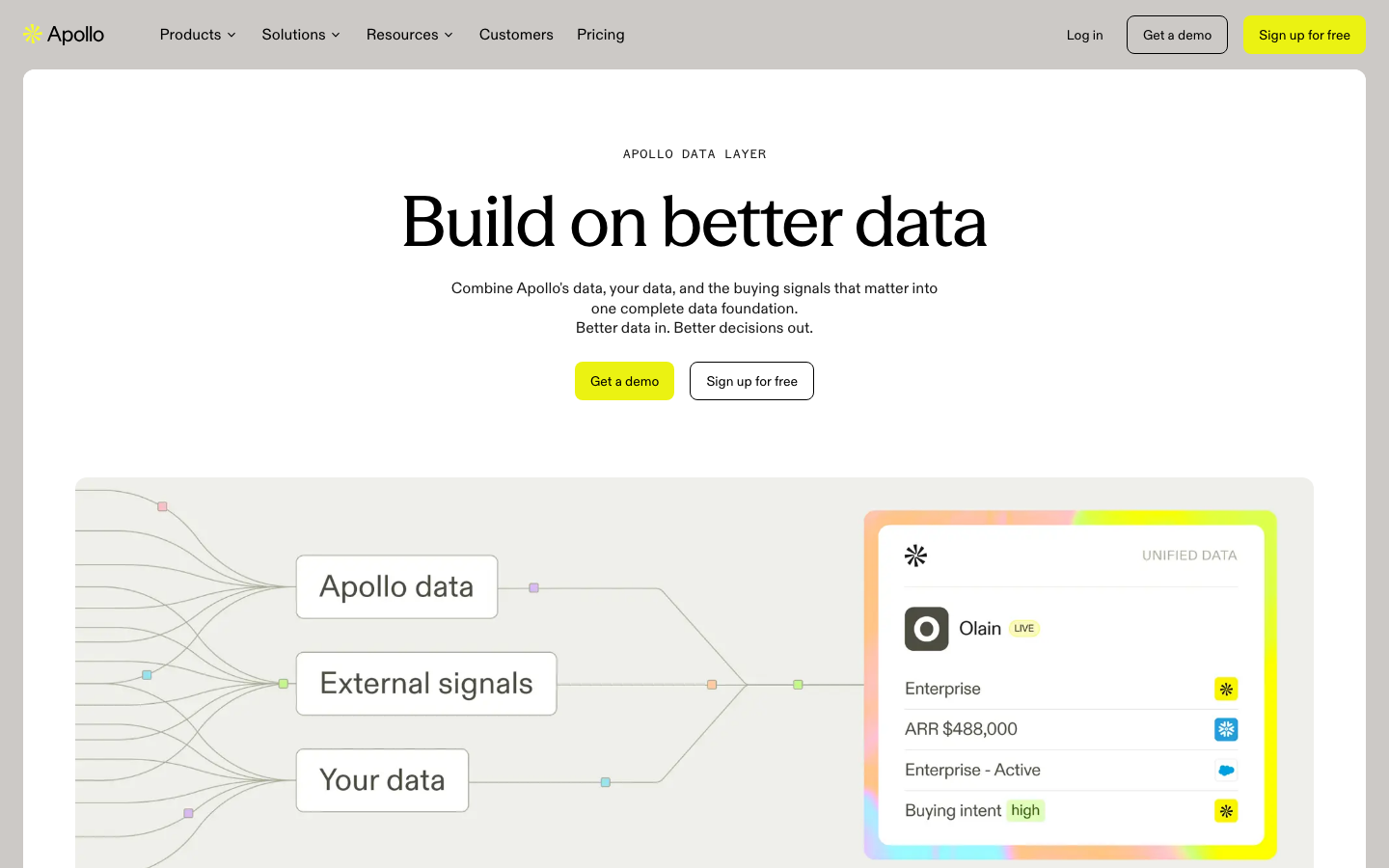
Apollo currently markets a network of 240M+ contacts and 30M+ companies. They're vendor-reported inventory figures, not an independently audited count of reachable people in your ideal customer profile. The only meaningful denominator for a buyer is the set of contacts in their actual industries, company sizes, job functions, and geographies.
How does Apollo perform across the outbound workflow?
1. Finding and qualifying the right accounts
The database is the starting point. Reps search for people and companies, use firmographic and buyer signals, then save candidates into lists. Apollo's product materials describe contact and account data, job changes, and intent signals. For a product-led B2B team, the useful test isn't whether the search returns a long list. It's whether the list matches your ICP and contains enough accurate contact information to support outreach.
Build a representative test set before paying. Include established customers' peers, companies your team has already researched manually, and difficult segments such as small private firms. For each result, check role relevance, current employer, verified email status, phone usability, and duplicate records. Record the misses as carefully as the hits; they're the real signal. A large database can definitely still be a poor fit for a narrow territory.
Apollo advertises 98% email accuracy on its data pages. Treat that as Apollo's marketing claim rather than a forecast for your own campaigns. Email verification isn't the same as inbox placement, a current job title, or permission to contact someone. A careful pilot tracks delivered messages, replies, and wrong-person responses by segment instead of treating a single global percentage as proof.
2. Enriching contacts without losing control of credits
Apollo's documentation says requesting a net-new verified email or phone number can consume credits. It also describes a refund rule for verified emails that bounce after being sent through Apollo within a stated window. That policy has conditions, so don't assume every bounced address is automatically reimbursed. Apollo also offers waterfall enrichment that can consult connected sources in sequence.
The operating risk is an unplanned request pattern. If a team enriches every search result before checking fit, it spends credits on records that should never enter a campaign. Reverse the order. Here's the sequence: first filter accounts and roles, then remove CRM matches and suppressions, then reveal contact details for approved prospects. Review credit usage by team and activity, not just by seat.
A practical GTM policy assigns a list owner and a reason for enrichment. Examples include a territory build, a named-account launch, or a response to a new buying signal. The policy should also identify who approves extra credits. Otherwise, a high-activity week can easily obscure whether usage produced better opportunities.
3. Building sequences and protecting deliverability
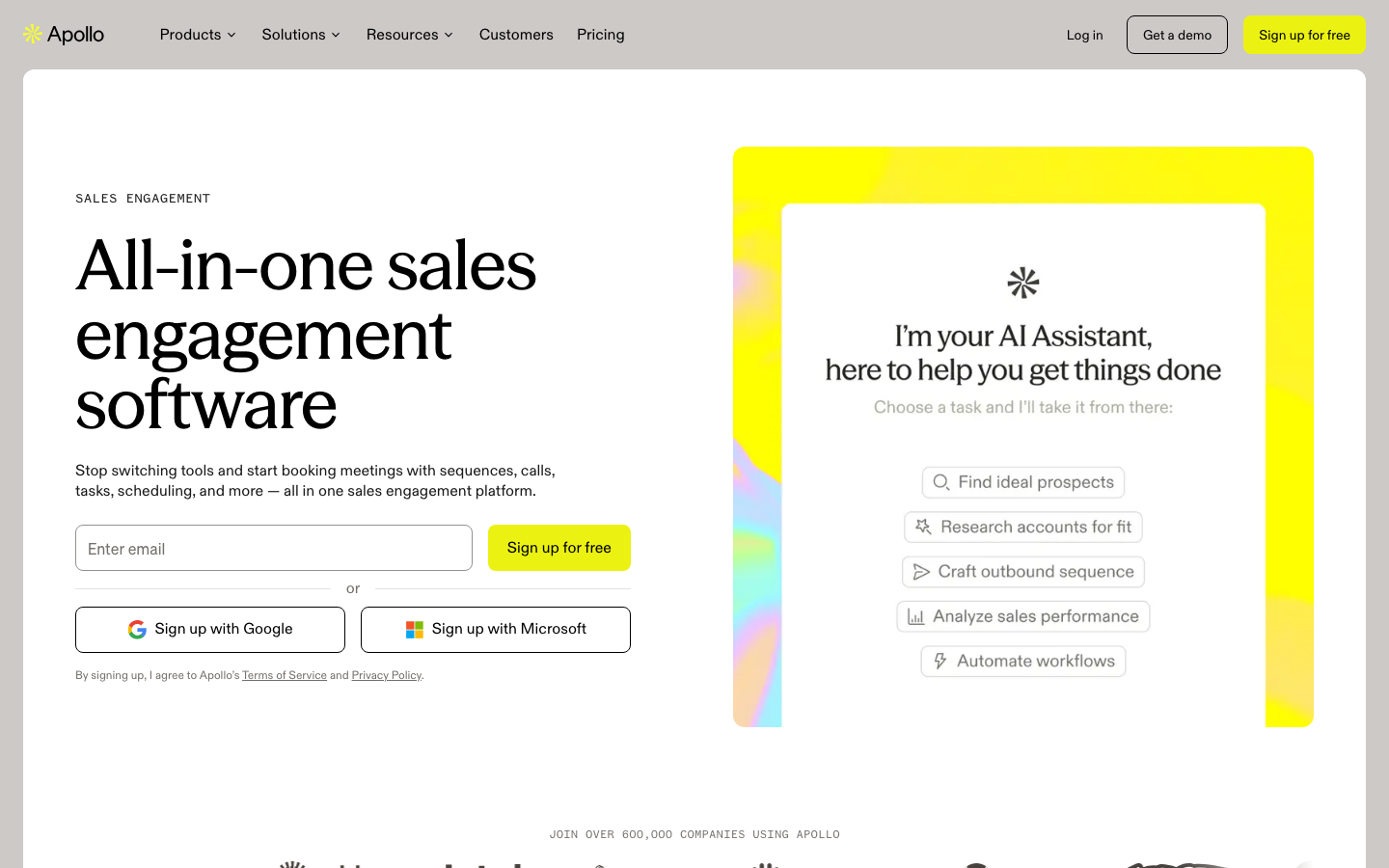
Apollo's sales engagement materials describe sequences containing email, calls, and tasks, along with deliverability scoring and mailbox guidance. This reduces tool switching for a straightforward outbound motion. It doesn't make an unreviewed message safe to send. Product marketing should still approve positioning, proof points, competitive caveats, and claims that salespeople must avoid.
Sequence quality has three parts. First, the audience and trigger must be relevant. Second, the message must reflect a real customer problem and an approved claim. Third, sending behavior must respect mailbox capacity and recipient signals. Apollo documents sequence sending schedules, email limits, warmup, and authentication guidance. A team should use these controls as safeguards, not as a license to increase volume without testing.
For a release campaign, create a separate sequence for existing customers, net-new prospects, and partners rather than putting everyone into a single generic flow. The approved brief should tell reps what changed, who benefits, which claim is supported, and what can't be promised. A manager should review the first outbound examples before scaling.
4. Calling and managing rep activity
Apollo describes a dialer integrated with prospecting and sequence workflows. This can make call tasks easier to execute and log. The important distinction for buyers is whether their plan and region include the calling functions they need, and how phone lookups and calling usage affect the credit budget. Confirm international calling, recording, and advanced dialer entitlements against the live checkout or sales quote.
Don't evaluate the dialer by feature count alone. Ask a rep to complete the full call workflow: open a target contact, confirm the number, place a call, record the disposition, schedule a follow-up, and check that the CRM activity's attached to the correct person and opportunity. A successful dial is less useful when the call note disappears or attaches to the wrong record.
5. Syncing Salesforce and HubSpot
Apollo maintains dedicated documentation for Salesforce and HubSpot integrations. Its Salesforce push guide is unusually helpful because it exposes the operational details: push conditions can depend on contact stage or email status; activities have separate settings; and account creation can accompany a contact push. That's where a sales tool becomes a data-governance decision.
Before connecting a production CRM, decide which system owns lifecycle stage, account association, record assignment, and duplicate handling. Use a sandbox where available. Test a new lead, an existing contact, a contact with multiple possible accounts, and a suppressed prospect. Confirm what is created, what is updated, and what isn't synchronized. The owner of the CRM should approve the field mappings and rollback plan.
Apollo's Salesforce guide warns that a pushed contact can cause an account to be created or updated even when account push isn't enabled. It also notes that matching multiple accounts can produce an unexpected association. That's a concrete reason to pilot record sync before enabling broad automatic pushes. A clean outbound sequence can still create a messy CRM.
What does Apollo cost in the US?
Apollo publishes a free plan and paid per-user tiers. Its own October 2026 materials list Basic at $49, Professional at $79, and Organization at $119 per user per month when billed annually. Organization requires at least three users. They're published annual-billing rates, not a guarantee of your final invoice. Taxes, add-ons, extra credits, and negotiated terms may change the total, so don't treat the sticker price as the invoice.
- Free$0 per month
- Limited prospecting credits
- Two sequences
- Evaluate fit before buying
- Basic$49 per user/month, billed annually
- 30,000 annual credits per user
- Unlimited sequences
- CRM integrations
- Professional$79 per user/month, billed annually
- 48,000 annual credits per user
- US dialer
- Automated workflows and AI research
- Organization$119 per user/month, billed annually
- 72,000 annual credits per user
- Three-user minimum
- International dialer and advanced security
Vendor-published US annual-billing figures, checked October 30, 2026. Confirm current checkout, add-ons, credit rules, and contract terms.
The most expensive mistake is comparing the annual seat rate to a competitor's monthly seat rate. Compare annual commitments on the same basis and separate fixed subscription cost from usage-driven credits. Apollo's own pricing explanations also make clear that the credit allowance changes by tier. If your team spends most credits on data you don't use, a larger allocation may simply hide a workflow problem.
Consider an illustrative five-seat Professional team. At the published annual rate, the subscription baseline is $395 per month, or $4,740 per year, before any extras. That arithmetic isn't a quote and assumes all seats are on that plan for the year. It tells you nothing about the value of the contacts acquired or whether phone usage will require more credits.
For a deeper treatment of tier limits, see our Apollo pricing breakdown. It's worth checking the current vendor checkout before you sign, since pricing pages and packaging can change.
What are Apollo's strongest advantages?
One operational path from search to outreach. The strongest reason to consider Apollo is simply fewer handoffs between a contact source and the engagement workflow. That can make it easier for a lean team to launch and adjust outbound campaigns. It also makes process design more important because one bad rule can affect several steps.
A meaningful way to trial your ICP. A free plan lets a buyer investigate whether the right accounts and contacts exist before agreeing to a paid term. A sensible pilot uses the same segments and quality criteria you'll use in production. Don't build the demonstration entirely around easy-to-find, well-known companies.
Detailed CRM controls. Apollo's Salesforce support documentation explains push and pull settings, activity sync, and duplicate considerations. Those controls are valuable to RevOps teams willing to configure them carefully. The same complexity creates risk for teams without a clear data owner.
Modern AI and workflow interfaces. Apollo now offers an MCP connector that it says can connect to ChatGPT and Claude for prospecting, enrichment, and sequence actions. Apollo's own page says access follows the permissions and limits of the underlying Apollo account. Treat this as another interface to a governed workflow, not a replacement for review of messaging or data permissions.
Where does Apollo fall short?
Database size isn't the same as ICP coverage. Apollo's published network statistics are broad. They don't reveal your segment's reachable-contact rate, current-title accuracy, or how often the correct phone number's available. Public reviews include complaints about phone quality and stale contact details, but they're individual experiences, not a representative benchmark.
Credits add another budget dimension. A seat can be affordable while the operating process consumes more enrichment or phone credits than expected. A disciplined team tracks credits per usable prospect and per meeting, not just credits purchased. Compare those figures with a second data source on the same sample.
Sales execution doesn't equal launch readiness. Apollo can deliver outreach, but it doesn't establish that SDRs, AEs, and CSMs read and understood an approved release brief. A GTM lead still needs message version control, objection handling, escalation ownership, and a readiness check before a product announcement reaches customers.
CRM integration can create unintended records. Apollo's Salesforce documentation specifically discusses account association, push conditions, and duplicate handling. Those risks are manageable, but they need testing. If your CRM hygiene's already weak, connecting more automated prospecting can increase cleanup work.
Public review sentiment needs context. At least one Capterra reviewer complains about phone data and support, while other reviewers praise the combination of search and outreach. Neither a single negative account nor a positive rating proves how Apollo will perform for your market. Use reviews to generate test cases, not to substitute for a pilot.
How should a GTM leader test Apollo before buying?
The best trial answers operational questions with evidence. Give the same test to Apollo and whichever alternative you're seriously considering. Keep the sample, users, time window, and success definitions consistent. Record raw results instead of relying on a salesperson's walkthrough.
Define the ICP sample
Choose target accounts across your real segments and territories. Include known-good and difficult-to-find contacts. Write down exclusion rules before searching.
Measure contact quality
Check role, company, email status, phone usability, and duplicates against independent evidence. Keep missing records in the denominator.
Run a controlled outreach workflow
Approve one message, configure sending limits, and track delivered, replied, and disqualified contacts. Don't mix several message changes in the same test.
Verify CRM outcomes
Inspect lead and account creation, owner mapping, activity logs, duplicate behavior, and suppression handling. Get sign-off from the CRM owner.
Review cost and readiness
Record seats, credits consumed, usable contacts, rep time, and meetings. Confirm the team understands the approved message before expanding the campaign.
- A representative ICP sample is documented before the trial
- Contact validity is checked outside Apollo
- Wrong-title and missing-phone cases are counted
- The approved messaging brief is versioned and available to reps
- Sequence sending limits and suppression rules are configured
- CRM mappings and duplicate behavior pass a sandbox test
- Credit consumption is measured by activity and outcome
- The contract, add-ons, and cancellation terms are reviewed
- SDRs and AEs pass a short launch-readiness check
- A named owner approves expansion after the pilot
A scorecard that makes the decision less subjective
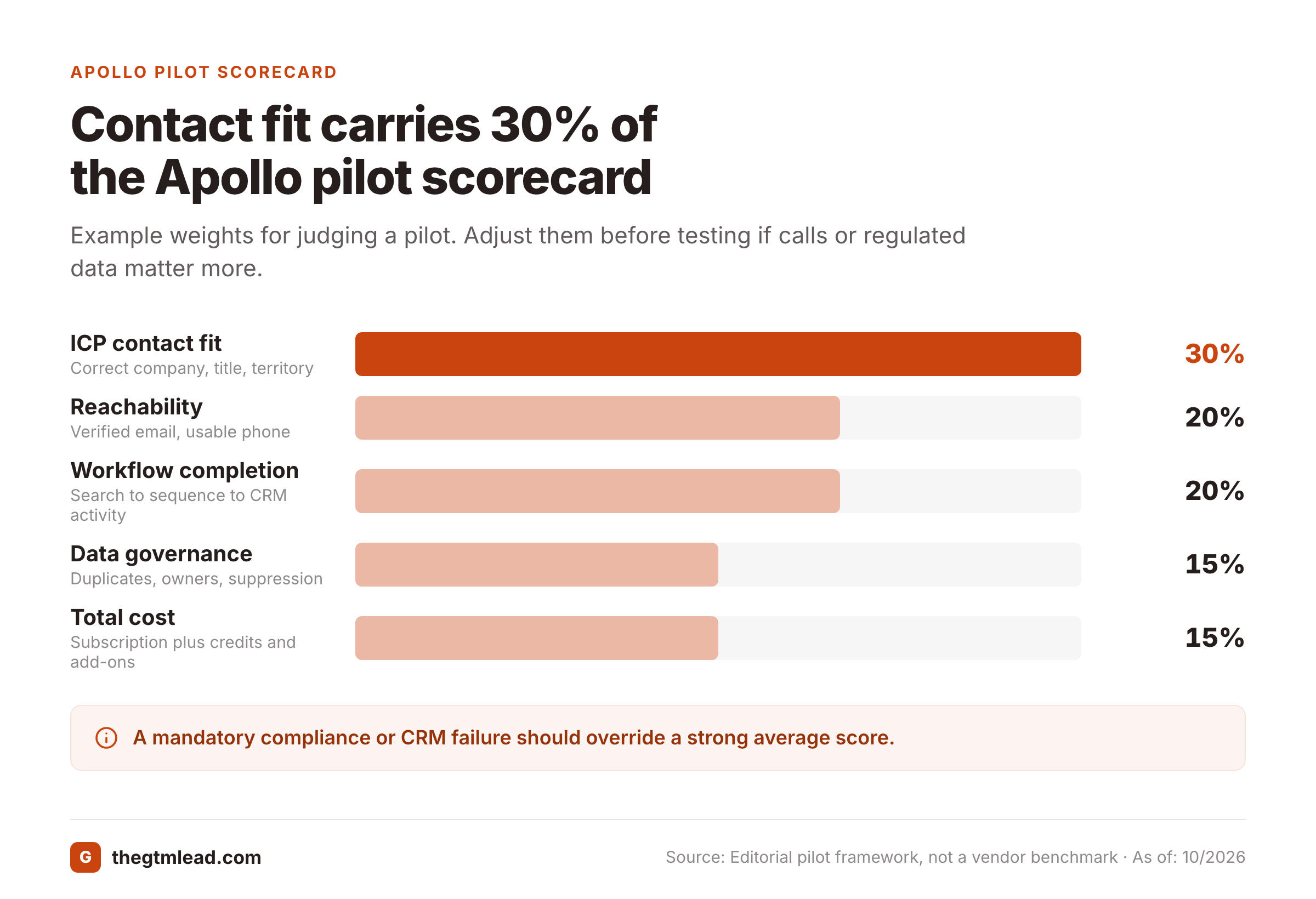
Use this scorecard after the pilot. The weighting is an illustrative editorial framework, not a vendor benchmark. Adjust it before testing if your business depends more heavily on calls or regulated data.
| Decision area | Example weight (%) | What to collect | Pass condition |
|---|---|---|---|
| ICP contact fit | 30 | Correct company, title, and territory | Your agreed quality threshold |
| Reachability | 20 | Verified email and usable phone outcomes | Meets your channel-specific target |
| Workflow completion | 20 | Search to sequence to CRM activity | No unexplained handoff failures |
| Data governance | 15 | Duplicate, owner, suppression, mapping checks | CRM owner signs off |
| Total cost | 15 | Subscription plus credit and add-on estimate | Within approved cost per useful outcome |
Don't sum these weights into a single product rating. Instead, grade each area using evidence from your own pilot. If a product fails a mandatory compliance or CRM criterion, a strong overall average shouldn't override the failure. The point of the scorecard isn't precision; it's to make trade-offs explicit before procurement, not to manufacture precision.
Apollo versus ZoomInfo, UpLead, and specialized engagement tools
Apollo's often compared with contact-data vendors and dedicated sales-engagement platforms, but these aren't interchangeable categories. The right alternative depends on which part of your workflow is failing. If your biggest issue is incomplete data, test another provider's coverage. If reps already have good data but can't manage complex sequences, evaluate a specialist engagement tool. If the failure is inconsistent product messaging, changing databases won't solve it.
| Primary problem | Shortlist direction | Buyer test |
|---|---|---|
| Need data and basic outbound in one workflow | Apollo | Complete the search-to-CRM pilot |
| Need deeper coverage in a specific territory | Apollo plus an independent data provider comparison | Compare identical account and contact samples |
| Need stronger outbound process controls | Dedicated engagement platform | Test branching, approvals, and reporting on real sequences |
| Need field readiness for a new product release | Release enablement process | Verify that each rep can explain the approved message |
Our ZoomInfo versus Apollo comparison focuses on the trade-off between a bundled prospecting workflow and a broader data purchase. For a data-focused alternative, see UpLead pricing. Treat these as decision aids, not as substitutes for a current quote and a controlled sample.
What should product marketing own when sales uses Apollo?
Apollo's an execution channel. The release message really needs a separate owner. Before a campaign launches, product marketing should provide a brief with the target buyer, the customer problem, approved proof, competitive positioning, and explicit language that reps mustn't use. Sales enablement should translate that brief into a short practice exercise. Managers should verify readiness before the sequence is activated.
One useful workflow is to attach a release ID to every campaign. The brief has a version, owner, approval date, and review trigger. Each rep acknowledges the brief and answers a scenario question. The campaign owner records which sequence uses that version. If the message changes, the owner knows which reps and campaigns need to be updated. That's a proposed governance practice, not an Apollo feature claim.
A lightweight product launch readiness checklist helps formalize those handoffs. It's particularly valuable when a product launch crosses SDR, AE, and customer success teams. The purpose is to stop outdated positioning from reaching buyers even when the sending technology works perfectly.
Who should buy Apollo, and who should skip it?
Consider Apollo if you run a lean B2B outbound team, have a reasonably defined ICP, need contact discovery and sequences together, and can assign an owner to CRM rules and data quality. The free plan makes it possible to test whether the database actually serves your market. Paid tiers become more compelling when reps use several parts of the workflow rather than treating Apollo as an occasional CSV export source.
Be cautious if most of your prospecting depends on hard-to-find direct dials, specialized international segments, strict data-governance requirements, or a complex engagement motion. Apollo may still work, but the pilot's got to prove it. If you already own a high-performing engagement platform, the economics of buying Apollo only for data can differ from its all-in-one positioning.
Skip a purchase for now if your team has no approved ICP, no outbound messaging owner, or no plan for CRM duplicates and suppression. Software can't compensate for those missing decisions. Fix the process first, then compare products against an agreed workflow.
Final verdict: is Apollo worth it in 2026?
Apollo's definitely worth shortlisting when your priority is to move from target account research to outreach and CRM follow-up with fewer disconnected tools. Its published annual seat prices start at $49 per user per month, and the integrated workflow is its main differentiator. The decision should still absolutely turn on verified contact outcomes, usable credits, CRM integrity, and rep readiness.
Our editorial verdict is strong conditional fit for lean outbound teams, not a universal recommendation. Buy after a pilot that proves the right contacts are reachable, the messaging is approved, and the CRM remains trustworthy. If the test exposes weak coverage or a more complex outreach need, compare alternatives on the same evidence instead of upgrading based on feature promises.
Is Apollo.io good for small sales teams?
Apollo can be a good fit when a small team needs prospecting data and sequences together. Test your own target accounts and credit usage before upgrading.
Does Apollo replace Salesforce or HubSpot?
No. Apollo connects to CRMs and can sync records and activities. Decide which system owns each field and test duplicate behavior before enabling broad synchronization.
Is Apollo's contact data accurate?
Apollo publishes an email-accuracy claim, but performance for your target market needs independent validation. Test a representative sample of titles, emails, and phone numbers.
Does Apollo have a free plan?
Yes. Apollo advertises a free plan with limited credits and sequences. Current entitlements should be confirmed on the vendor's pricing page.
What is the biggest risk with Apollo?
The biggest operational risk is treating an integrated workflow as self-governing. Monitor contact quality, credit consumption, CRM changes, and approved sales messaging.
Is Apollo an enablement or training platform?
Apollo is primarily a prospecting and engagement platform. A GTM team still needs a separate process to approve messaging and verify that reps are ready to use it.