Partner marketing software is the system a vendor uses to run joint marketing with resellers, agencies and referral partners: co-branded campaigns and assets partners can launch under their own name, marketing development fund (MDF) requests and claims, partner communications, and reports on which partner activity produced leads and pipeline. It decides whether a partner can send a campaign next Tuesday, or whether that takes a week of back-and-forth with your team.
This guide compares eight tools: Unifyr (formerly Zift Solutions), Mindmatrix, ZINFI, Impartner, Channelscaler (formerly Allbound), Magentrix, PartnerStack and Crossbeam. Facts and prices come from each vendor's own product, pricing and help pages as of November 2026, with one review site per tool for user feedback. We read vendor material and did not run these products. Three sibling guides cover the neighboring jobs: partner relationship management software for deals and commissions, partner portal software for the partner-facing login and partner enablement software for training and certification. This page stays on the marketing side: co-branding, campaigns, MDF, content, reporting and co-sell data.
- tools compared on vendor pages
- 8
- per month, ZINFI Starter, the lowest list price for a full partner suite here
- $1,450
- Crossbeam's free plan, which covers account overlap data only
- $0
- tools with quote-only or unpublished pricing
- 4 of 8
What Is Partner Marketing Software?
Partner marketing software lets a vendor and its partners market together without passing files and approvals around by email. The vendor supplies campaigns, brand rules and funds; the partner launches under its own name; both sides see what the activity produced. Partners sit outside your org chart, so the software has to protect your brand while giving them room to edit, and it has to keep the source campaign attached to every lead that comes back.
The eight tools below come in three product types, and the line between them decides the shortlist.
| Product type | What it gives partners | What it gives you | Where it stops |
|---|---|---|---|
| Through-channel marketing platform | Campaign kits, co-branded email, social and landing pages they launch themselves | Brand locks, lead routing and campaign-level reporting | Often sold as one module of a larger platform, with pricing by quote |
| PRM suite with marketing modules | A portal with approved assets, co-branded collateral and MDF requests | Funds, approvals, proof of performance and a CRM sync in one program | Campaign automation is limited or not documented for several vendors |
| Referral and co-sell platform | Incentives, shared resources, referral links, or lists of accounts they share with you | Partner-sourced revenue and overlap data to pick co-marketing targets | No co-branded campaign tooling; a separate tool runs the sends |
Unifyr, Mindmatrix and ZINFI sit in the first row. Impartner, Channelscaler and Magentrix sit in the second. PartnerStack and Crossbeam sit in the third.
Partner marketing software isn't the same as partner relationship management, which also runs deal registration, leads and commissions, and it isn't affiliate network software, which pays publishers for traffic. Some vendors blur the line, though, because they sell both. Several tools below bundle marketing with PRM, which is why the guide on partner relationship management software shares vendors with this one. Here the scope is narrower: what each vendor gives a partner marketer to plan, brand, fund and measure joint campaigns.
What Partner Marketing Software Has to Do
Six checks separate a platform partners use to launch campaigns from a shared folder with a login. We used them to read every vendor.
- Co-branding with locked rules. Partners should add their logo, name and contact details to your assets without touching your claims or disclosures. Look for editable zones, approval steps and visibility by region, tier or partner type.
- Campaign kits partners can launch. A kit bundles emails, a landing page and assets. Ask what the partner actually clicks to launch, which channels are covered and whether a fix on your side reaches copies already live.
- An MDF workflow from request to payment. A fund request needs a budget check, an approval route, proof of performance and a payout step. Look for budget caps, claims that wait for proof and a report that compares spend with pipeline.
- Lead flow that keeps the source. Leads from a partner campaign should reach the partner, your CRM or both, with the campaign attached. If the source is lost, nobody can report what the campaign produced.
- Reporting by campaign, partner and fund. You need to know which partners launched which kits, what each fund produced and what attribution model sits behind the numbers. Check whether the vendor states one.
- Price, plan caps and CRM sync. Some vendors publish a monthly price with a partner cap, and some put MDF only on a top plan. Check which plan holds the marketing modules before the first call.
Our Picks by Partner Marketing Job
 Best for locked-brand campaign kits partners launchUnifyr (formerly Zift Solutions)Email, social and landing-page kits with brand locks, plus MDF claims and pipeline-per-fund reporting.
 Best for AI-built kits and a concierge optionMindmatrixA Campaign Builder Agent, co-branding and MDF claim agents, and a team that can run campaigns for partners.
 Best for PDF co-branding and MDF ledger controlZINFILocked logo zones, per-asset approval, a shared suppression list for email and separate ledgers for MDF, rewards and rebates.
 Best for newsletters, social syndication and MDF in one PRMImpartnerInterest-based multilingual newsletters, social syndication, co-branded assets and an MDF flow from request to payment.
 Best for MDF governance with proof checksChannelscaler (formerly Allbound)AI proof-of-performance validation, duplicate-invoice flags and MDF-to-pipeline attribution, from $50k per module per year.
 Best for a published portal price with MDFMagentrixMDF from $3,000 per month on Advanced, co-brandable PDFs, Word documents and emails, claims gated on proof.
 Best for incentive-led SaaS partner programsPartnerStackChallenges, bonus rewards, MDF requests and shared resources tied to automated commission payouts.
 Best for choosing co-marketing targetsCrossbeamShared account lists that show where your prospects and a partner's customers overlap, free for up to 3 seats.
Partner Marketing Software Compared
| Tool | Product type | What it leads with | Price status (USD) | G2 rating |
|---|---|---|---|---|
| Unifyr (formerly Zift Solutions) | Through-channel marketing platform | Locked-brand campaign kits, lead routing and MDF claims | Quote only (Activate, Grow, Scale) | 4.4 (480) |
| Mindmatrix | Through-channel marketing platform | AI campaign kits, co-branding, MDF claim checks and a concierge option | Not published, modules sold separately | 4.7 (107) |
| ZINFI | Through-channel marketing platform | Co-branded email, PDF co-branding, content library and MDF ledgers | Starter $1,450, Professional $2,350 per month; Enterprise quote | 4.9 (654) |
| Impartner | PRM suite with marketing modules | MDF flow, social syndication, co-branded assets and newsletters | Quote only (Emerge, Ignite, Pro) | 4.4 (572) |
| Channelscaler (formerly Allbound) | PRM suite with marketing modules | MDF governance, co-branded collateral and a tier-gated content system | From $50k per module per year | 4.4 (306) |
| Magentrix | PRM suite with marketing modules | Portal with MDF, co-brandable documents and pop-up alerts | Essentials $1,500, Advanced $3,000 per month; Unlimited quote | 4.6 (126) |
| PartnerStack | Referral and co-sell platform | Challenges, resources, MDF requests and commission payouts | Quote only (Launch, Growth, Enterprise) | 4.7 (904) |
| Crossbeam | Referral and co-sell platform | Account overlap lists for co-marketing and co-selling | Free; Connector $4,800 per year; Supernode and Enterprise quote | 4.8 (381) |
Prices are what each vendor page shows before a sales call. Unifyr is the current name of Zift Solutions, and Channelscaler is the current name of Allbound.
How a Co-Marketing Campaign Moves Through the Tools
A joint campaign passes through four owners: partner marketing, the partner, your CRM team and finance. The tools differ in which of these steps they own, and no single platform covers the whole path in the same depth.
- Partner marketingPick target accounts where your prospects and the partner's customers overlap Week -3
- Partner marketingBuild the campaign kit with brand locks: emails, landing page and assets Week -2
- PartnerRequest MDF and attach the plan for the activity Week -2
- Partner marketingApprove the request against the budget and eligibility rules Week -1
- PartnerCo-brand the assets and launch the kit under the partner's name Week 0
- CRM teamRoute leads to the partner, the CRM or both, with the source campaign attached Weeks 0 to 4
- PartnerUpload proof of performance and submit the claim After the activity
- FinancePay the approved claim and record it against the fund After approval
- Partner marketingCompare fund spend with leads and pipeline by partner Next quarter review
Through-Channel Marketing Platforms: Unifyr, Mindmatrix and ZINFI
Unifyr, Mindmatrix and ZINFI put campaigns at the center. Partners launch co-branded email, social and landing-page content from kits you build, and the platform tracks leads back to the campaign. All three also run MDF, so they overlap with the next group, but they lead with the campaign rather than the portal.
Unifyr (formerly Zift Solutions)
Unifyr (formerly Zift Solutions)
Best for locked-brand campaign kits partners launch
Unifyr, the platform formerly sold as Zift Solutions and ZiftONE, is the clearest through-channel marketing product here: partners launch vendor-built campaign kits under their own brand.
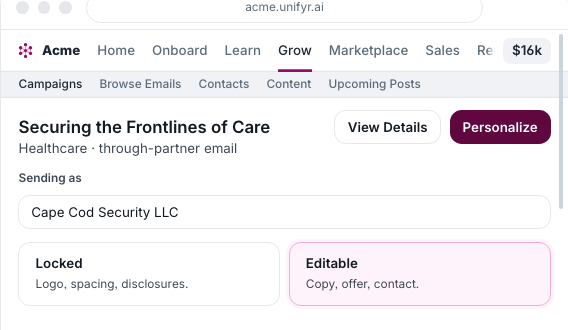
A campaign bundles emails, a landing page and assets. You choose what partners can edit and lock logos, spacing and disclosures. Partners switch on channels (email, social posts, a hosted landing page) from one campaign record, and edits you make centrally correct every copy already launched. A My Collateral view lets partners click Customise on an asset and change only the parts you left open.
Forms on partner landing pages capture leads, and routing rules send them to the partner's funnel, your CRM or both. Leads show partner, deal value and source campaign, and an Attribution screen shows which accounts partner campaigns closed. The MDF module allocates funds by tier, segment or program, sets a reimbursement rate and claim deadline per fund type, collects claims with proof of performance and compares spend with MQLs and pipeline by partner. MDF Management is listed on the top Scale plan.
Plans are Activate, Grow and Scale, with 25, 50 and 100 partner organizations included and no dollar prices published. The integrations page lists 69 systems, including HubSpot, Salesforce, Marketo and Eloqua, and the Activate plan includes one CRM connector. The vendor's pages describe no paid-ad launching for partners.
- You want partners to launch locked-brand email, social and landing-page kits themselves, with your edits reaching every launched copy
- You need MDF claims with proof of performance and pipeline-per-MDF-dollar reporting next to partner campaigns
- You need MDF below the top tier, since MDF Management is listed on the Scale plan and no plan shows a dollar price
- You need paid-ad launching or multi-touch attribution models, which the channel marketing pages do not describe
- Users like
- Time savings and automation of partner marketing work
- Users dislike
- Occasional problems publishing campaigns to LinkedIn and authentication issues
- Source: G2, 480 reviews
- Starting price
- Not published (quote only)
- Pricing
- Quote only; Activate, Grow, Scale plans
- Partner orgs included
- 25, 50 or 100 by plan
- CRM sync
- HubSpot, Salesforce, Dynamics 365, Pipedrive and more (one connector on Activate)
- Formerly
- Zift Solutions / ZiftONE
- Plans
- Activate, Grow, Scale (quote only)
- MDF
- Listed on the Scale plan
- Integrations
- 69 listed, incl. HubSpot, Salesforce, Marketo, Eloqua
Mindmatrix
Mindmatrix
Best for AI-built kits and a concierge option
Mindmatrix sells partner marketing automation as a module of its PRM, built around reusable campaign kits and a set of AI agents.
Campaigns in a box are organized by product, industry, partner type and audience. A Campaign Builder Agent turns a brief into a partner campaign kit for review and launch, and AI-drafted content must be reviewed before it is published. A Co-Branding Agent applies partner branding to supported assets within your brand rules, using templates, controlled fields, approval workflows and role-based access.
Partners get co-branded landing pages with lead capture and co-branded webinar registration. The funding side covers plans, requests, claims and approvals, and an MDF Agent checks claims against the program plan and supporting evidence. Mindmatrix also lists centrally managed Google Ads and MDF-funded ad campaigns, and a concierge option in which its team and AI run campaigns for partners who lack time.
Reporting shows performance by campaign and partner, with pipeline and revenue attribution based on rules you configure. CRM connectors cover Salesforce, HubSpot and Dynamics 365. Pricing is not published, and modules can be bought separately. The marketing page describes campaign kits and approved assets rather than a dedicated asset library.
- You want AI agents that build campaign kits, apply co-branding and check MDF claims, plus a concierge team that can run campaigns for partners
- Centrally managed Google Ads or MDF-funded ad campaigns for partners matter to you
- You need a published price or a named list of marketing-automation, ad and webinar integrations, because neither is on the site
- You want an analytics-rich asset library, since the marketing page describes campaign kits and approved assets rather than a library module
- Users like
- Helpful support team and ease of use (G2 Ease of Use 8.6)
- Users dislike
- Steep learning curve and a lot of customization needed; some say the UI looks dated
- Source: G2, 107 reviews
- Starting price
- Not published, quote only (modules can be bought separately)
- Headquarters
- Pittsburgh, PA
- Modules
- PRM, partner marketing, partner enablement, sales enablement
- Pricing
- Not published
- Ownership
- No acquisition stated on site
- CRM sync
- Salesforce, HubSpot, Dynamics 365
- AI agents
- Campaign Builder, Co-Branding, MDF
- Ads
- Centrally managed Google Ads
- Price
- Not published
ZINFI
ZINFI
Best for PDF co-branding and MDF ledger control
ZINFI spreads partner marketing across a Market zone, an email module, co-branded asset management and a content library, and it publishes starting prices.
In the email module, partners edit open text in drag-and-drop templates while layout and branding stay locked. Campaigns bundle emails, assets and an interest form, can be cloned, and carry tracking parameters on every link. ZINFI walks you through SPF, DKIM and DMARC setup, keeps a shared suppression list across partners and requires one named approver per launch. Interest forms create lead records with consent, clicks raise the lead score, and routing follows rules such as incumbent partner or round robin. One click can register a deal with the campaign attached, and results write back to the CRM.
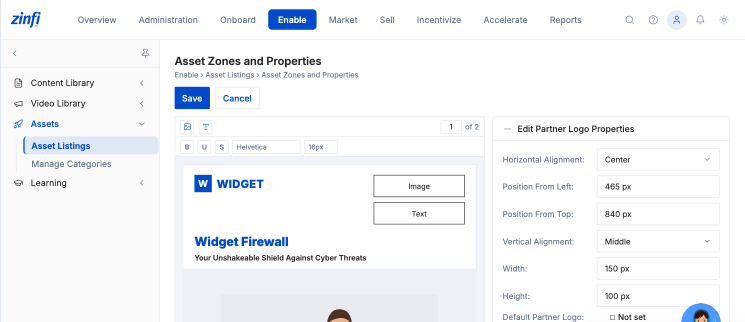
Co-branding works on PDFs: you place logo and text zones on a master file, partners enter their name, logo and URL, and the platform generates the file. Assets move through Draft, Published and Expired states with optional multi-level approval, and distributors can co-brand once and share downstream by link. The MDF module covers proposal, approval, claim, proof of performance and payout, with separate ledgers for MDF, rewards and rebates and payout by CSV bank file, Stripe or PayPal. AI fund allocation, auto-approval and fraud screening are labeled as coming soon.
Starter costs $1,450 per month and Professional $2,350 per month, billed annually, with one-time setup fees of $3,480 and $5,640. The list tiers are priced for programs of up to 250 partners, and Enterprise is by quote.
- You want PDF co-branding with locked logo and text zones, per-asset approval and distributor-to-downstream-partner sharing next to email campaigns with a shared suppression list
- MDF needs full ledger control, with separate MDF, rewards and rebate ledgers and Stripe, PayPal or CSV payout
- You want AI MDF automation today, because auto-approval, fraud screening and revenue attribution are labeled coming soon
- You expect the entry tiers to include every marketing module, since the published tier-to-module mapping for Market, MDF and co-branding is unclear
- Users like
- Integrates with CRM and ERP systems, responsive support
- Users dislike
- Few complaints; those raised were cumbersome login and password change, wish for more partner-facing customization, and a favorites tab for resources
- Source: G2, 654 reviews
- Starting price
- Starter from $1,450/month ($17,400/year); Professional from $2,350/month ($28,200/year); Enterprise custom. Billed annually, plus one-time setup
- Entry price
- $1,450/month billed annually (Starter)
- Modules
- 6 lifecycle zones, 30 applications, 10 core modules (Enterprise)
- Program size at list price
- Up to 250 partners
- AI
- Optional, off by default, four levels
- Starter
- $1,450 per month, billed annually
- Professional
- $2,350 per month, billed annually
- Setup fee
- $3,480 Starter, $5,640 Professional
- Partners at list price
- Up to 250
PRM Suites With MDF and Co-Branding: Impartner, Channelscaler and Magentrix
Impartner, Channelscaler and Magentrix run the whole partner program, so marketing is one set of modules next to deal registration and the portal. They fit when funds, approvals and assets need to sit in the same place as partner tiers and the CRM. Campaign automation is thinner here than in the first group, and each vendor's page says less about it.
Impartner
Impartner
Best for newsletters, social syndication and MDF in one PRM
Impartner's marketing modules cover MDF from request to payment, co-branding, email campaigns, social syndication and multilingual partner newsletters inside its PRM.
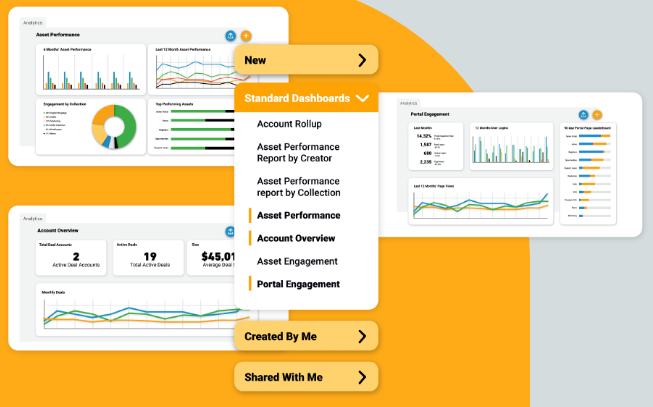
The MDF page describes partners submitting requests and uploading proof of performance in the portal, your team reviewing through customizable approval workflows, and both sides seeing remaining funds and payment status in real time. Budgets can be analyzed inside the PRM to focus dollars where they drive revenue, though the page doesn't state an attribution model.
The partner marketing automation page lists on-demand co-branding of partner materials, email campaigns, social syndication across partner channels, a content center that works as an asset library, personalized paid ad campaigns, reporting and lead management. News on Demand sends newsletters based on each partner's interests and profile with no HTML or manual segmentation, in multiple languages and with engagement tracking. Impartner cites a customer with 30,000 partners in 10 languages.
Impartner syncs with Salesforce, Microsoft Dynamics and HubSpot in both directions, and lists Crossbeam among its integrations. Pricing is by quote under the package names Emerge, Ignite and Pro. Campaigns in a box and landing pages aren't named on the marketing automation page.
- You want MDF request-to-payment tracking, multilingual interest-based partner newsletters, social syndication and co-branded assets in one PRM synced to Salesforce, Dynamics or HubSpot
- Your partners span many languages and need newsletters targeted by profile
- You need a published price or a lightly configured rollout, since pricing is quote only and G2 reviewers describe a heavy setup and limited customization
- You want ready-made campaign kits with landing pages, which the marketing automation page does not name
- Users like
- Extensive features, ease of use once learned, helpful customer support and Salesforce integration
- Users dislike
- Interface not intuitive for new users, limited customization, and complex, time-consuming setup
- Source: G2, 572 reviews
- Starting price
- Not published (quote only)
- Pricing
- Request only, no public tiers
- CRM sync
- Salesforce, Microsoft Dynamics, HubSpot
- Core modules
- PRM, partner marketing automation, partner communications, partner services
- AI
- Aimi AI layer
- MDF
- Request, approval, proof upload, payment tracking, ROI analysis
- Newsletters
- News on Demand, multilingual
- Price
- Quote only
Channelscaler (formerly Allbound)
Channelscaler (formerly Allbound)
Best for MDF governance with proof checks
Channelscaler, formerly Allbound, has the deepest MDF module of the PRM suites here, with a content system that supports partner co-branding.
You define budgets and eligibility criteria before funds are released, partners follow guided request and claim flows, and approvals route by configurable rules with an audit trail. An AI feature called Scailyn validates proof of performance automatically and flags duplicate invoices and inconsistent claims. Payments run through an XTRM integration, and attribution reporting links MDF activities to pipeline and revenue when connected to your CRM. Dashboards show fund availability, utilization, partner participation and campaign performance.
The content management system sets visibility by tier, geography and partner type, with version control, expiry dates and usage dashboards by asset and partner. Partners can create co-branded collateral with their logos and prospect pages with custom messaging through embedded editors. The platform navigation shows no dedicated campaign, email or social syndication module, and the MDF page doesn't mention co-branding.
Pricing starts at $50,000 per module per year, set per program and fixed for the contract term, with onboarding and a customer success manager included. Channelscaler connects to Salesforce, HubSpot and Dynamics.
- MDF governance is the priority: AI proof-of-performance checks, duplicate-invoice flags, XTRM payouts and MDF-to-pipeline attribution
- You want tier-gated assets with version control and expiry dates that partners can co-brand with their own logo
- You want ready-made through-channel campaigns, partner email sends or social syndication, because none has a module page
- Your budget is below $50,000 per module per year, the stated starting price
- Users like
- Easy partner portal, strong support (G2 Quality of Support score 9.1) and a responsive development team
- Users dislike
- Onboarding documentation could be clearer; a few reviewers asked for custom reporting and earlier notice of code changes
- Source: G2, 306 reviews
- Starting price
- Starts at $50k per module per year, priced per program
- Former names
- Allbound and Channel Mechanics
- Starting price
- $50k per module per year
- User limits
- None stated
- Buying route
- Also on Microsoft Commercial Marketplace
- MDF checks
- AI proof validation, duplicate-invoice flags
- Payouts
- XTRM integration
- CRM sync
- Salesforce, HubSpot, Dynamics
Magentrix
Magentrix
Best for a published portal price with MDF
Magentrix is a partner portal with MDF claims, co-brandable documents and in-portal alerts, and it lists monthly prices with partner caps.
Partners request marketing funds, upload proof of performance and get paid. Approval rules route each request, payment waits until the required proof is uploaded, budgets can't be over-allocated, and funded activities link to the leads and opportunities they produced. Co-branding works on admin-prepared PDFs, Word documents and emails, where partners add their logo and company details. Document Management stores collateral, product guides and sales decks with search, granular permissions and usage analytics.
For communication, Pop-up Alerts carry an image or video with targeting, a call to action and reporting, and Articles carry news and product updates. Threads can be tied to leads. Reports and dashboards are available to admins or partners, with built-in analytics for documents, articles and MDF. No campaign feature is described, and the closest item is the co-branded emails and collateral.
Essentials costs $1,500 per month for 100 partner users or 10 partner accounts. Advanced costs $3,000 per month for 150 partner users or 20 accounts and adds MDF. Unlimited is by quote, and monthly card billing adds 10%.
- You want a published-price portal, $3,000 per month on Advanced, with MDF claims gated on proof and co-brandable PDFs, Word documents and emails
- You want pop-up alerts that reach partners inside the portal when a campaign or message changes
- You need campaign automation, partner email sends or social syndication, because the features page describes none
- You have more than 20 partner accounts on a small budget, since the plan caps push you to the quote-only Unlimited tier
- Users like
- Highly customizable experience and strong quality of support
- Users dislike
- A learning curve and, for some reviewers, limits in customization
- Source: G2, 126 reviews
- Starting price
- Essentials $1,500 per month (100 partner users or 10 partner accounts); Advanced $3,000 per month (150 partner users or 20 accounts); Unlimited by quote. Listed monthly; annual pricing on request, 10% surcharge noted for monthly card billing
- Entry price
- $1,500/month (Essentials, listed monthly)
- Partner limit at entry
- 100 partner users or 10 partner accounts
- Security
- ISO 27001 and SOC 2 Type II stated
- CRM
- Salesforce, HubSpot, Dynamics (mirrored)
- Essentials
- $1,500 per month, 100 partner users or 10 accounts
- Advanced
- $3,000 per month, adds MDF
- Co-branding
- PDFs, Word documents and emails
Referral and Co-Sell Platforms: PartnerStack and Crossbeam
PartnerStack and Crossbeam don't build campaigns. PartnerStack covers what motivates partners to promote you, and Crossbeam covers which accounts a joint campaign should target. Use them next to a campaign tool, or on their own for programs built on incentives or data.
PartnerStack
PartnerStack
Best for incentive-led SaaS partner programs
PartnerStack manages co-marketing from a branded partner portal and ties it to commission payouts, which suits SaaS affiliate, referral and reseller programs.
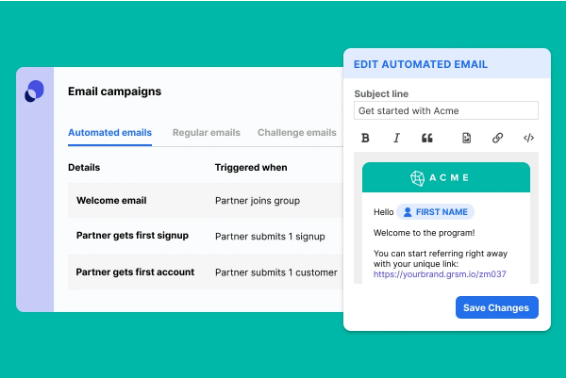
The portal gives partners one place for program resources, with marketing assets and approved messaging in a Resources area. Partners can submit MDF requests through the portal, and the pricing page lists MDF management and payments starting on the Growth plan. Challenges let partners complete tasks, such as sign-up or sales milestones, to earn bonus rewards that are commissioned automatically, and Growth also adds advanced partner segmentation and a learning module.
Branded onboarding emails, multi-step workflows and trackable referral links cover communication. Partners can submit referrals from Slack, email or HubSpot, and CRM sync with Salesforce and HubSpot pushes deals into your sales process. The platform credits partners for the partner-sourced revenue they drive. The pages describe no co-branded asset generator, no joint-campaign planning and no attribution beyond partner-sourced revenue.
Pricing is quote only across Launch, Growth and Enterprise, set by program size, features and support, with no limit on partners or internal users. Launch includes either link tracking or lead and deal registration, not both.
- Your partner marketing is incentive-driven: challenges, bonus rewards and MDF requests in one portal tied to automated commission payouts
- Partners should submit leads from Slack, email or HubSpot, and you want the PartnerStack network to recruit agencies already active there
- You need joint-campaign planning, co-branded asset generation or account-overlap targeting, none of which the pages describe
- You need MDF on the entry plan, since MDF management and payments start on Growth
- Users like
- Automated partner payouts.
- Users dislike
- Payout and commission timing, with some reviewers also asking for more report customization and reporting longer approval waits.
- Source: G2, 904 reviews
- Starting price
- Not published (quote only; Launch, Growth, Enterprise plans priced after a demo)
- Pricing
- Quote only
- Plans
- Launch, Growth, Enterprise (quote only)
- Partner limit
- No limit stated
- Implementation
- Most teams live in weeks, per pricing FAQ
- MDF
- Growth plan and above
- Limits
- No partner or internal user limit stated
- Integrations
- Salesforce, HubSpot, Pipedrive, Slack, Crossbeam
Crossbeam
Crossbeam
Best for choosing co-marketing targets
Crossbeam shows which accounts you and a partner share, so you can pick co-marketing targets before you spend on a campaign.
Teams connect their CRMs and share account data under permissions each side controls. For marketing, Crossbeam offers shared segments built on overlapping customers and prospects, and Dynamic Shared Lists that update as accounts enter or leave a filter. The help center's co-marketing workflow uploads an overlap list into your marketing platform and builds content around the shared integration. A HubSpot listing syncs overlap data into contact lists for joint campaigns, and needs a paid Crossbeam plan and HubSpot Marketing Hub Professional.
The marketing page also describes surfacing accounts already in partners' pipelines and using overlap and Partner Impact data to prioritize MDF spend. That is decision support: Crossbeam has no MDF requests, partner portal, asset library or campaign sends. Revenue Attribution is listed on the Supernode plan and above.
Free gives up to 3 seats and 3 standard populations, and Free users can view shared lists but not create or share them. Connector costs $4,800 per year with one seat included, extra seats at $1,800 per user per year, and unlimited partner connections on every plan. Crossbeam merged with Reveal and continues under the Crossbeam name.
- Partner marketing starts with data: you want to know which target accounts overlap with a partner's customers before choosing co-marketing targets, then push lists into HubSpot or email
- You want to test overlap on the free plan with 3 seats before paying $4,800 per year for Connector
- You need MDF requests, a partner portal, co-branded assets or campaign execution, none of which the pages describe
- Your partners aren't on Crossbeam or won't share CRM data, since reviewers cite partner adoption as the main limit
- Users like
- G2's summary says users praise ease of use and the Salesforce integration; top pros on the comparison page are efficiency improvement and time saving, and common overlaps scores 9.6.
- Users dislike
- Recurring cons are partner coordination challenges and data inaccuracy that can come from partner input; some find the interface clunky.
- Source: G2, 381 reviews
- Starting price
- Free: $0 forever (up to 3 full-access seats). Connector: $4,800 per year platform fee with 1 seat included and extra seats at $1,800 per user per year; monthly payment adds a 10% surcharge. Supernode and Enterprise: custom, contact sales.
- Branding
- Still sold as Crossbeam. It merged with Reveal in an all-stock deal announced June 25, 2024, and operates under the Crossbeam brand
- Network
- 30,000+ companies on the Crossbeam network (vendor claim)
- Free plan
- $0, up to 3 full-access seats, 50 Crossbeam Credits per year, 3 standard populations
- Connector plan
- $4,800 per year, 500 credits, 3 custom populations, 5,000 record exports
- Free
- $0, up to 3 seats, 3 standard populations
- Connector
- $4,800 per year, extra seats $1,800 per user per year
- Attribution
- Revenue Attribution on Supernode and above
- Campaign sends
- None, lists sync to your marketing tool
How Much Does Partner Marketing Software Cost?
Partner marketing software is mostly priced by quote, and the marketing modules often sit on a higher plan than the entry price suggests. Four of the eight vendors publish a price or a starting price. The table shows what each page states before a sales call, in USD.
| Tool | Price shown by the vendor (USD) | What sits behind it (USD where stated) |
|---|---|---|
| Unifyr | Quote only | MDF Management on the Scale plan; 25, 50 or 100 partner organizations included by plan |
| Mindmatrix | Not published | Modules can be bought separately |
| ZINFI | Starter $1,450 and Professional $2,350 per month, billed annually; Enterprise quote | One-time setup of $3,480 and $5,640; list tiers priced for up to 250 partners |
| Impartner | Quote only | Packages named Emerge, Ignite and Pro |
| Channelscaler | From $50,000 per module per year | Set per program, fixed for the contract term |
| Magentrix | Essentials $1,500 and Advanced $3,000 per month; Unlimited quote | MDF starts on Advanced; caps of 100 partner users or 10 accounts, then 150 or 20 |
| PartnerStack | Quote only | MDF management and payments start on Growth |
| Crossbeam | Free; Connector $4,800 per year; Supernode and Enterprise quote | Extra seats $1,800 per user per year; shared lists need a paid seat |
How to Set Up a Partner Marketing Program
A partner marketing program works when the rules exist before the platform is configured, because software enforces rules but can't invent them. These steps put the decisions in order.
Write the brand rules partners can't break
List the logo use, claims and legal lines that stay locked, and the parts partners may edit.
ZINFI and Unifyr (formerly Zift Solutions) both let you lock content and open only the editable zones.Build one campaign kit before you build ten
A kit holds the email, the landing page and the assets for one offer. Launch it with two or three partners first, using a tool such as
Mindmatrix or Unifyr (formerly Zift Solutions), and fix what they trip over.Set MDF rules before the first request arrives
Decide the budget per partner or tier, which activities qualify, what counts as proof and the claim deadline.
Channelscaler (formerly Allbound) and Magentrix gate payment on proof; ZINFI offers separate ledgers per fund type.Pick targets, then route the leads
Use shared account lists from
Crossbeam to choose which partner customers to reach, and decide whether leads go to the partner, your CRM or both. Keep the source campaign on every lead.Review spend against pipeline after one quarter
Compare fund spend with leads and opportunities by partner.
Unifyr (formerly Zift Solutions), Channelscaler (formerly Allbound) and Impartner report MDF against pipeline; check what attribution rules sit behind the numbers.
When Your Own Team Needs to Know the Campaign Message
A co-marketing campaign about a pricing or packaging change reaches your customers through partners, and customers then ask your own SDRs, AEs and CSMs. Partner marketing software doesn't check that your own team can answer.  The GTM Lead covers that gap for your internal revenue team: one release brief with the approved messaging and the do-not-say lines, a short readiness check, and a view of who has acknowledged it. It isn't a partner marketing tool and it isn't in the comparison above.
FAQ
What is partner marketing software?
Partner marketing software lets a vendor and its partners plan, brand, fund and measure joint campaigns in one place. The eight tools here come in three types: campaign-led platforms, PRM suites with marketing modules, and referral or co-sell platforms.
What does a partner marketing manager do?
A partner marketing manager plans joint campaigns with partners, supplies them with approved assets and messaging, manages co-marketing funds and reports on partner-sourced leads and pipeline. The software in this guide automates the asset, campaign, fund and reporting parts of that role.
Is partner marketing software the same as PRM?
No. Partner management tools, usually called partner relationship management (PRM) software, also run deal registration, lead distribution and commissions. Partner marketing is the campaign, asset and fund side. Impartner, Channelscaler, Magentrix and Mindmatrix bundle both, while Crossbeam covers shared account data only.
How much does partner marketing software cost?
Partner marketing software is mostly priced by quote. ZINFI lists Starter at $1,450 per month and Professional at $2,350 per month, billed annually, and Magentrix lists Essentials at $1,500 per month and Advanced at $3,000 per month. Channelscaler starts at $50,000 per module per year, and Crossbeam's Connector plan costs $4,800 per year.
Is there free partner marketing software?
Crossbeam has a free plan with up to 3 seats, but it covers account overlap data, not campaigns, assets or MDF. The other seven tools in this guide show paid tiers or quote-only pricing.
Is affiliate marketing software the same thing?
No. Affiliate platforms track and pay publishers for traffic and sales. Partner marketing software supports joint campaigns with business partners, and several tools overlap only where a vendor runs referral programs. PartnerStack is the one tool here built around affiliate, referral and reseller programs for SaaS companies.