The best market intelligence software is the tool whose data answers the market question you actually have: how big a segment is, who the players are, which accounts are buying, or where demand is moving. This guide compares ten tools by the dataset each one is built on, the go-to-market decision it supports and how its data reaches your CRM or AI assistant.
We read each vendor's pricing, product and help pages and a review source on October 20, 2026. Where a vendor sells by quote, we'll show what each plan unlocks instead of guessing at numbers.
- tools compared
- 10
- data families: research and market size, private companies, accounts and intent, web demand
- 4
- publish a dollar price (Statista, Crunchbase, Similarweb)
- 3
- describe a way for Claude, ChatGPT or another AI assistant to query their data
- 10 of 10
Best Market Intelligence Software: Our Picks
For B2B teams, our picks match each tool to the market question it answers best, from a sourced market size to a list of accounts that are researching your category this week. The reviews further down explain each pick and who should skip it. If you need one place to start with a published price, Crunchbase has a free account and Statista a free Basic plan, but neither one gives you market sizing or intent for free.
 Best for cited industry researchAlphaSenseMore than 500 million documents, including filings, broker research and expert call transcripts, searchable with cited summaries.
 Best for a sourced market sizeStatistaMarket Insights models size and a 5-year forecast for more than 1,000 markets; it starts at the quote-only Professional plan.
 Best for mapping a tech marketCB Insights13M+ private company profiles, market rankings and Mosaic health scores, plus interviews with competitors' customers.
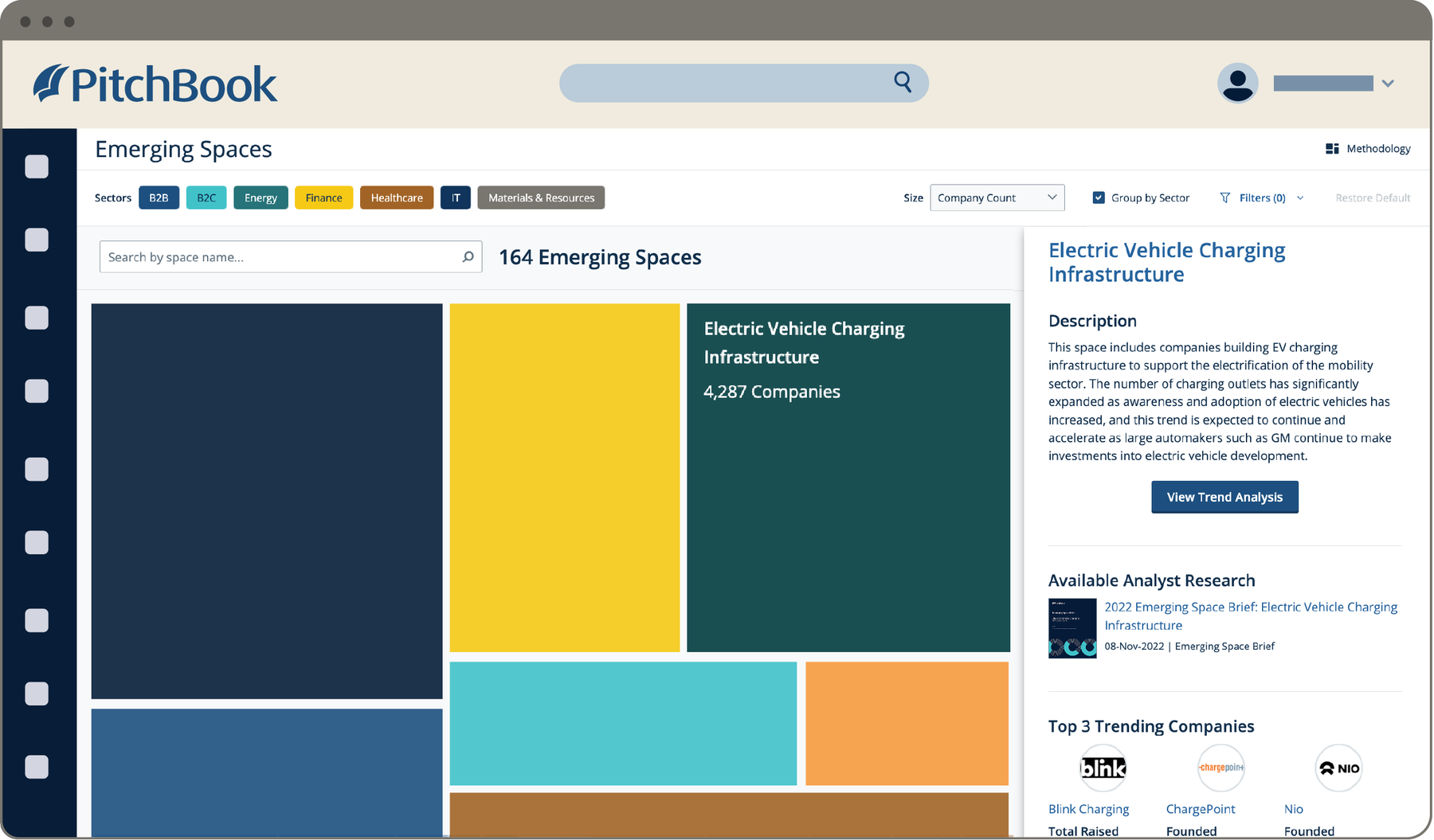
 Best for funding and ownership dataPitchBook13.4M+ companies and 3.2M+ deals collected by a research team of more than 1,800 people.
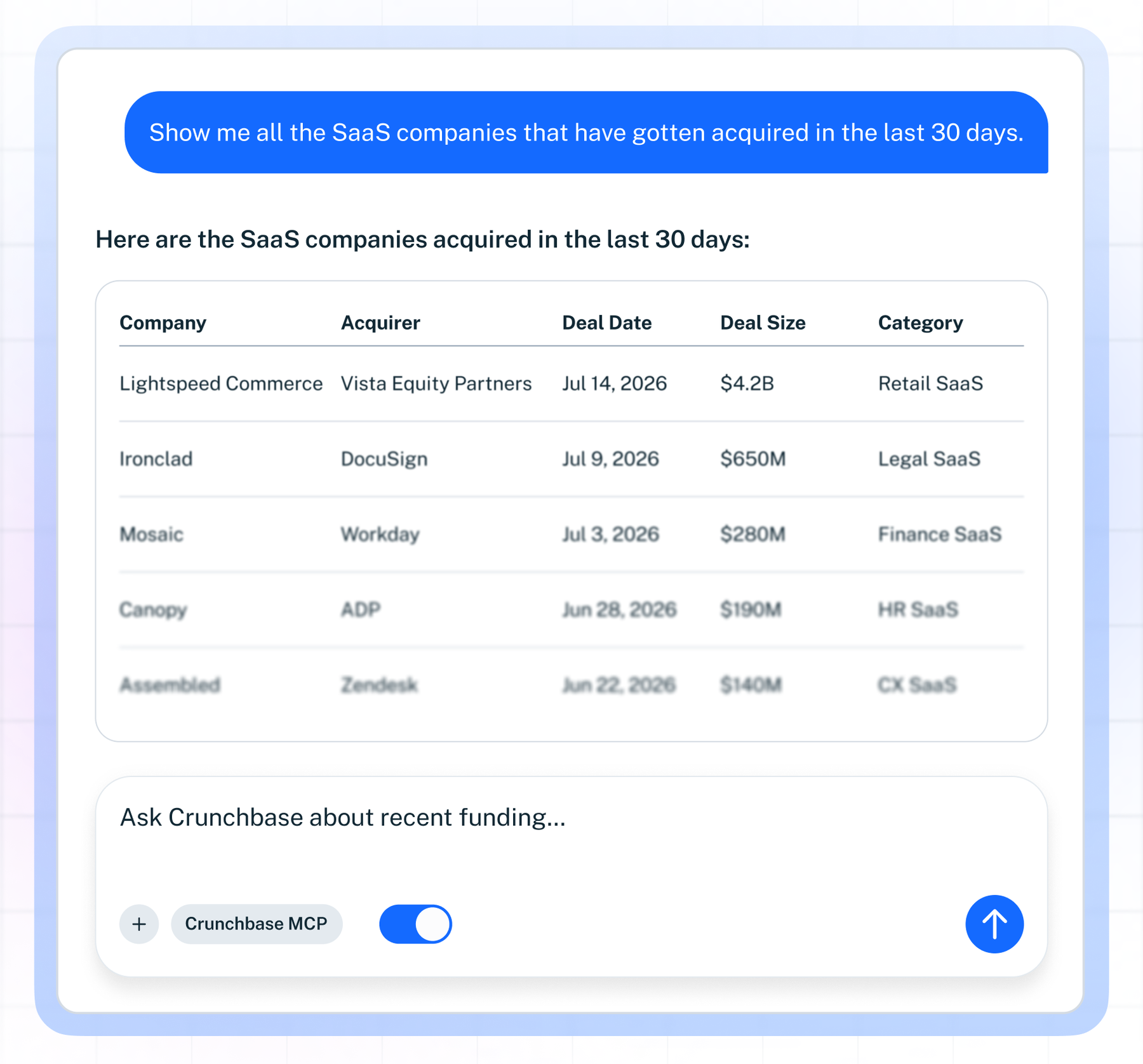
 Best low-cost startCrunchbaseA free account, Pro from $49 per month billed annually in year one, and funding predictions inside Claude or ChatGPT.
 Best for building a target account listZoomInfoCompany, contact, technographic and intent data synced to Salesforce, HubSpot or Dynamics.
 Best for predicted buying stage6senseIntent from web research and partner networks, rolled up into a predicted buying stage per account.
 Best for ABM teams that run adsDemandbaseAccount intent from its own B2B ad platform, buying groups and plays in one system.
 Best for digital demand and shareSimilarwebTraffic-based market share across 200+ predefined industries; self-serve plans from $125 per month billed annually.
 Best for monitoring industrial marketsValona Intelligence200,000+ sources in 115+ languages with analyst services, strongest in manufacturing-heavy sectors.
Market Intelligence Software Compared
| Tool | Data family | How the data reaches your team | Price (USD) | Rating |
|---|---|---|---|---|
| AlphaSense | Market intelligence platform | Cited summaries, watchlist alerts, Salesforce and an MCP beta | Quote only | 4.6 (333) |
| Statista | Statistics and market size data | XLSX and PPTX downloads, Research AI, Connect API and MCP (credits) | Basic free; Starter $199 and Personal $649 per month billed annually (US page, annual contract); Market Insights only in Professional and Enterprise by quote | 4.4 (30) |
| CB Insights | Private company and tech market data | Watchlist alerts, Salesforce append, browser extension, MCP connector | Quote only (Browser Analyst, Strategy Terminal, Data Solutions); 10-day trial offered | 4.4 (16) |
| PitchBook | Private capital market data | Email alerts on saved lists, CRM add-on, Excel and PowerPoint plugins, AI connectors | Quote only (seat-based; CRM integration is a paid add-on); free trial on request | 4.5 (268) |
| Crunchbase | Private company data and predictions | Exports, Chrome extension, MCP in Claude and ChatGPT; CRM sync on Business | Free account; Pro $49 per month billed annually for the first year (list $79) or $99 monthly; Business from $199 per month billed annually | 4.4 (413) |
| ZoomInfo | B2B company, contact and intent data | CRM sync, streaming API, Slack and Teams alerts, MCP for Claude and ChatGPT | Platform packages by quote; GTM.AI free start with 1,000 data and 1,000 AI credits, then prepaid credits from $20 | 4.5 (9,189) |
| 6sense | Account intent and predictive ABM | Salesforce and HubSpot apps, Chrome extension, Outreach and Salesloft, MCP beta | Quote only (three Sales Intelligence bundles, demo required); the free Sales Intelligence tier was removed in July 2026 | 4.2 (1,570) |
| Demandbase | ABM platform with B2B data and intent | Salesforce enrichment, HubSpot App Cards, APIs, read-only MCP | Quote only: platform fee plus a flat fee per user; Marketing or Sales not sold on their own | 4.4 (2,018) |
| Similarweb | Web and traffic intelligence | Dashboards, exports, API and MCP with API access | From $125 per month billed annually ($199 monthly); business plans by quote | 4.4 (1,175) |
| Valona Intelligence | Market intelligence platform | Alerts, newsletters, dashboards and an MCP connection | Quote only | 4.3 (5) |
 The GTM Lead Our product | Release enablement acknowledgements | Shows which SDRs, AEs and CSMs are ready to explain a product change | Access code | No reviews yet |
Prices and plans checked on vendor pages on October 20, 2026. Ratings are from G2 pages read on October 20, 2026; AlphaSense and Valona ratings are the G2 figures shown in search results on October 19, 2026, because G2 blocked the page. Valona's rating rests on 5 G2 reviews and CB Insights' on 16.
What Market Intelligence Software Does
Market intelligence software collects external data about your market, such as companies, buyers, competitors, demand and industry trends, and turns it into answers a team can use for planning and selling. Business intelligence tools, by contrast, look inward at your own sales and finance data. Gartner now tracks a category called Competitive and Market Intelligence Platforms and published its first Magic Quadrant for it in 2026, but account data and intent tools such as ZoomInfo and 6sense sit in other Gartner categories.
It's a wide category because the data underneath differs so much. The ten tools here fall into four families:
- Research and market size (AlphaSense, Statista): documents, statistics and modeled market sizes. They answer "how big is it and where is it going?"
- Private company and funding data (CB Insights, PitchBook, Crunchbase): who the players are, who raised money and who is growing.
- Accounts and intent (ZoomInfo, 6sense, Demandbase): which companies and people fit your segment, and which are researching your category right now.
- Web demand and monitoring (Similarweb, Valona): how digital audiences and share move, and what is being published about a market across news and trade sources.

What Counts as Market Intelligence Data
Market intelligence data is any external dataset that describes your market rather than your own business. In this guide that means five kinds: modeled market sizes (Statista models more than 1,000 markets), research documents and expert calls (AlphaSense searches more than 500 million documents), private company and deal records (PitchBook lists 13.4M+ companies and 3.2M+ deals), account, contact and intent data (ZoomInfo tracks 4,500+ intent topics), and web traffic and search demand (Similarweb covers 200+ predefined industries). Your own CRM, product usage and win-loss notes are business data, but they become far more useful when you compare them against these external sets.
Market Intelligence vs Competitive Intelligence vs Market Research
These terms overlap, and vendors don't use them consistently. Market and marketing intelligence get mixed up most often: one looks out at the market, the other looks at how your own campaigns perform. This table shows where the lines usually sit.
| Discipline | What it looks at | Typical output | Example tools |
|---|---|---|---|
| Market intelligence | The whole market: size, players, buyers, demand, trends | Market size, segment list, account list, trend brief | Statista, CB Insights, ZoomInfo, Similarweb |
| Competitive intelligence | Named competitors: pricing, launches, messaging, wins and losses | Battlecards, competitor alerts, win-loss notes | Crayon, Klue (see our competitive intelligence software guide) |
| Market research | Questions you ask buyers directly, at a point in time | Surveys, interviews, focus group reports | Survey panels and research agencies |
| Marketing intelligence | Your own campaigns and channels | Attribution and channel performance reports | Marketing analytics tools |
| Business intelligence | Your own internal data | Dashboards on pipeline, revenue and usage | BI and reporting tools |
Which Tool Answers Which Market Question
Start with the question, because there isn't a single tool that answers all of them well. A product marketer sizing a new segment needs a different dataset than a revenue leader building next quarter's target list, even though both call it market intelligence.
| Your market question | Data you need | Tools that answer it |
|---|---|---|
| How big is this market, and how fast is it growing? | Modeled market size, forecasts, analyst and broker reports | Statista, AlphaSense |
| Who are the players in this category, and who is gaining? | Private company profiles, funding, market maps | CB Insights, PitchBook, Crunchbase |
| How many companies fit our ICP, and who are they? | Firmographics, technographics, contacts | ZoomInfo, Demandbase, 6sense |
| Which accounts are researching our category this month? | Intent signals and buying stage | 6sense, Demandbase, ZoomInfo |
| Where is digital demand shifting between players? | Web traffic, search demand, audience share | Similarweb |
| What is changing in our industry, region or regulation? | Monitored news, trade, regulatory and financial sources | Valona, AlphaSense |
Here's a useful rule: if the answer is a number about the market, look at the first two families. If the answer is a list of companies or people, look at the account and private-company families.
From Market Data to a GTM Decision
Most roundups stop at what a tool collects. For a GTM team, though, the data only matters once it changes a decision: the segment you pick, the accounts you work, the story you tell. The block below shows which tools document each step. Where a vendor's pages don't describe a step, the tool is left off it.
- Step 1Size the market
- Statista
- AlphaSense
- Similarweb
Breaks when the segment looks big on a slide, but nobody can say where the number came from - Step 2Map the players
- CB Insights
- PitchBook
- Crunchbase
- Valona Intelligence
Breaks when a new funded entrant shows up in deals before anyone has a view on it - Step 3Build the account list
- ZoomInfo
- Demandbase
- 6sense
- Crunchbase
Breaks when the ICP is defined, but the list in the CRM doesn't match it - Step 4Prioritize who is buying
- 6sense
- Demandbase
- ZoomInfo
Breaks when reps work the whole list instead of the accounts researching now - Step 5Watch for change
- CB Insights
- PitchBook
- Crunchbase
- Valona Intelligence
- ZoomInfo
Breaks when funding, ownership or market shifts arrive after the plan is locked
In short, the GTM tool chain runs in five steps: size the market with Statista or AlphaSense, map the players with CB Insights, PitchBook or Crunchbase, build the account list with ZoomInfo or Demandbase, prioritize with 6sense or Demandbase intent, and watch for change with alerts. Two things stand out. First, market sizing and account data come from different tools: Statista and AlphaSense give you a market number, while ZoomInfo, Demandbase and 6sense give you the companies inside it. A bottom-up TAM usually multiplies the count of matching accounts from an account database by your average contract value, and a top-down check compares that against a published market size. Second, the "watch for change" step is where market intelligence turns into messaging work. When a market shift changes your positioning, someone still has to update the story your sellers tell, and that's a release enablement problem more than a data problem.
How to Choose Market Intelligence Software
Choose market intelligence software by the market question first, then check whether the tool's data covers your segment and can get out to where your team works. The criteria below are the ones that separate these tools in practice.
- The question you need answered. A market size, a list of players, an account list and a demand trend need different datasets (see the table above). Buying an account database to size a market is a common mistake, and it isn't cheap.
- Coverage of your segment. Every vendor publishes large totals, but your segment's only a slice of them. Test with your own ICP: region, company size, industry codes, the technologies your buyers run. Reviewers of Crunchbase and CB Insights say data on smaller or non-venture-backed firms is thinner.
- Where the numbers come from. Ask how the data is collected (research team, crawlers, partner networks, ad bidstream, panels) and how often it refreshes. Statista updates Market Insights twice a year; PitchBook says it updates data several times a day.
- How data leaves the tool. Check export caps, CRM sync and API access per plan. Crunchbase Pro allows 2,000 export rows a month and no CRM sync; PitchBook sells CRM integration as an add-on.
- AI assistant access. All ten describe a way for Claude, ChatGPT or similar assistants to query their data, but the terms differ: some are in beta, some need an extra license or API access, and some meter each record in credits.
- Who will own it. Intent platforms need someone to maintain keyword lists and segments. Research libraries need analysts who will read. If nobody owns the tool, the data in the CRM won't stay current.
- Contract terms. Most of these tools sell annual contracts; Statista's, for example, renew at list price after the first year. Ask about auto-renewal, seat minimums and what a credit buys before you sign.
- Show me our ICP segment, not your total database: how many companies and contacts match?
- Where does this number come from, and when was it last refreshed?
- What can we export per month on the plan you're quoting, and does it sync to our CRM?
- Is the AI assistant or MCP connection included, in beta or a separate license?
- What does one credit buy, and what happens to unused credits?
- Who on our side needs to maintain this, and how many hours a week?
- What are the renewal terms and the notice period?
The 10 Market Intelligence Tools, Reviewed
Each review opens with the dataset the tool's built on, then the GTM job it does well, how the data gets out, what users report and who should skip it. Prices appear once, in the card, and we haven't ranked our own product.
AlphaSense
Best for cited industry research
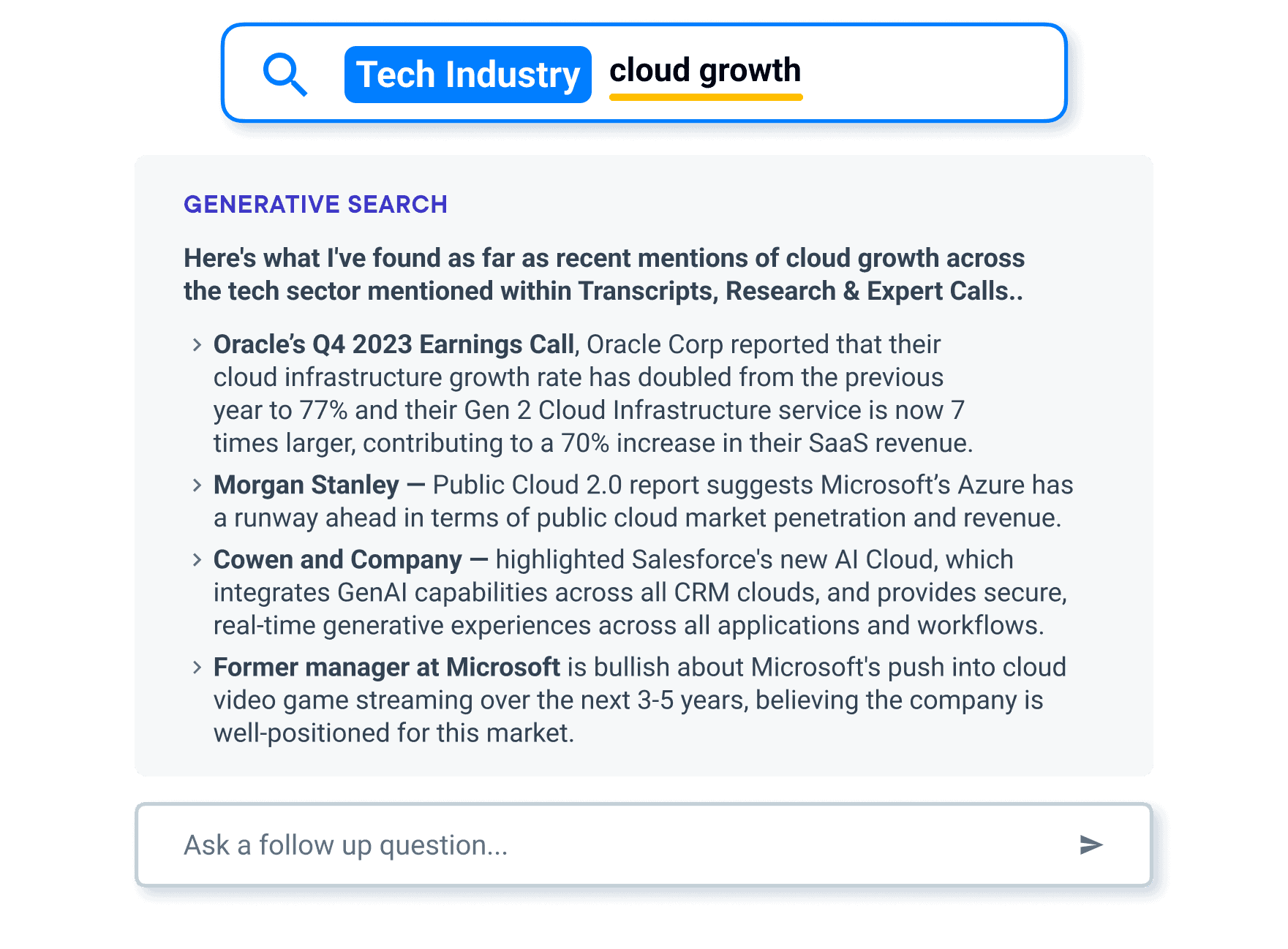
AlphaSense is a search and AI layer over more than 500 million documents: company filings, earnings transcripts, news and trade journals, broker research and expert call transcripts.
It's a document dataset, not a set of modeled numbers. When a product marketer needs a market size, AlphaSense's own walkthrough describes building a search for CAGR, market share and TAM figures, which usually come from industry and broker reports, then checking them against what executives said on earnings calls. Its Deep Research agents can also draft TAM and SAM estimates from those sources, according to AlphaSense's market intelligence page.
The expert call library is the part GTM teams use most for positioning work. AlphaSense says it adds more than 8,000 transcripts a month across more than 29,000 companies, which gives you how customers and former employees describe a category in their own words. Watchlists and real-time alerts follow named companies, and every summary cites its source text.
- strategy or product marketing needs cited market numbers and industry context from filings, broker research and expert calls
- you follow public companies and want earnings call summaries quickly
- you need an account list or intent signals: AlphaSense answers research questions, not who is buying
- you have a mid-market budget: plans are quote only and G2 reviewers name cost as the main complaint
- Users like
- Semantic search that saves time on complex research
- Users dislike
- Cost, and a steep start for new users
- Source: G2, 333 reviews
How it works in practice
A typical workflow: an analyst saves a watchlist of the ten companies in a segment, sets alerts for filings and transcripts, and runs a search for market size figures when the planning cycle starts. Data reaches other teams as cited summaries and exports. AlphaSense lists a live Salesforce integration and HubSpot as coming soon. The MCP connector is in beta: the account team has to enable it, an admin adds it as a custom connector in an MCP-capable chat client, and full broker research isn't available through it.
- Starting price
- Quote only
- Library
- 500M+ documents
- Plans
- Market Intelligence and Enterprise Intelligence
- CRM
- Salesforce live, HubSpot coming soon
- AI assistant
- MCP connector in beta, enabled by the account team
Statista
Best for a sourced market size
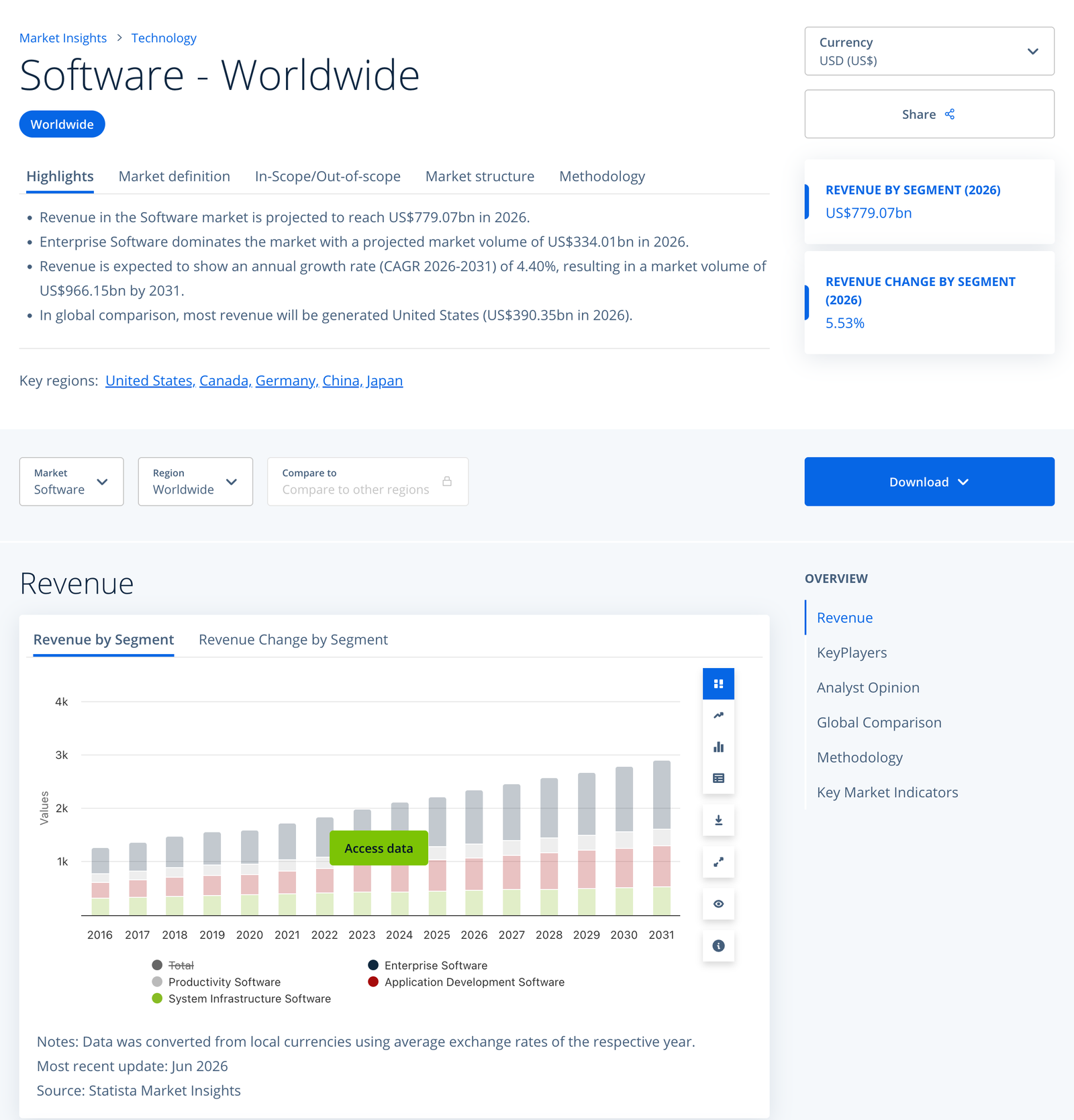
Statista is two products in one account: a statistics portal, and Market Insights, its own models of market size, forecasts and key figures for more than 1,000 markets in 190+ countries and regions.
Market Insights is what GTM teams buy Statista for. Each market shows a 5-year forecast and up to ten years of history, splits revenue into volume and price, and shows revenue share among key players, which gives a rough landscape. Statista updates the standard models twice a year, more often after market-changing events.
Still, the catch is in the plans. Statista's US account page lists Basic free, Starter at $199 and Personal at $649 per month, billed annually, but Market Insights is only included from the Professional plan, which moved to quote-only pricing in mid-2026. So the published prices buy statistics and reports. They don't buy market sizing. Research AI answers questions in plain language with sources; free accounts get five queries and paid plans unlimited.
- you need a sourced market size, forecast and key-player share for a TAM slide or territory plan
- you want charts you can drop into a board or launch deck as XLSX or PPTX
- you expect market sizing on Starter or Personal: it starts at the quote-only Professional plan
- you need account lists, intent or alerts on competitor moves: Statista is a lookup tool, not a feed
- Users like
- Statistics and insights across almost every industry
- Users dislike
- Price
- Source: G2, 30 reviews
How it works in practice
A typical workflow: a product marketer opens a market in Market Insights, picks the country or region, and exports the size, forecast and key-player split as XLSX into a TAM model or as PPTX into a planning deck. Teams that want the same data inside their AI tools buy Statista Connect, which exposes Market Insights and statistics through a REST API and an MCP server for assistants such as ChatGPT, Claude, Copilot and Gemini. Connect is billed per request in credits: Statista's documentation lists 15 credits to fetch a Market Insights dataset. We read the USD prices on the US version of the account page captured on October 2, 2026, because the live page showed euro prices to our location on October 20.
- Starting price
- Basic free; Starter $199 and Personal $649 per month billed annually (US page, annual contract); Market Insights only in Professional and Enterprise by quote
- Markets modeled
- 1,000+ in 190+ countries
- Forecast
- 5 years, up to 10 years of history
- Refresh
- Twice a year
- Market Insights from
- Professional plan (quote)
- Contract
- Annual, renews at list price
CB Insights
Best for mapping a tech market
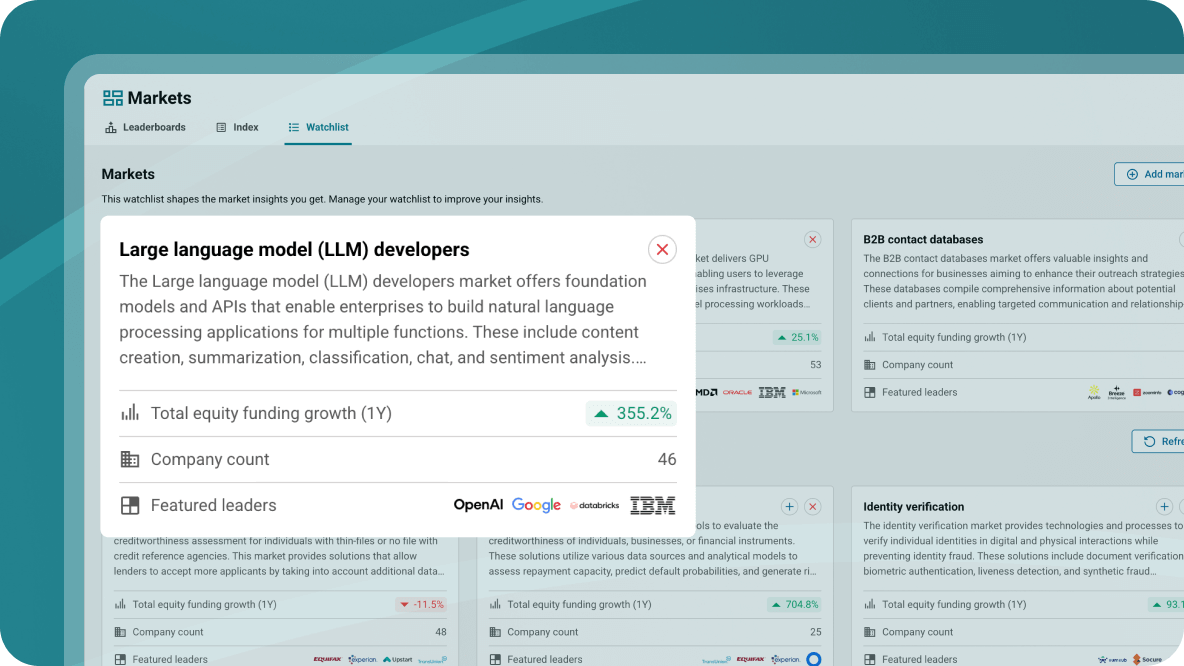
CB Insights is built on private company data: 13M+ company profiles and 1.5 million deals, with 20% of transactions reported directly by investors, plus rankings of the companies in 1,600+ tech markets.
Two things set it apart for product marketers. The Mosaic Score rates a private company's health from 0 to 1,000, with sub-scores for growth, financial strength, industry health and management team; CB Insights says it built the model with the National Science Foundation. And its primary research includes analyst briefings, where companies tell CB Insights about pricing, references and capabilities, and customer transcripts, where a vendor's customers talk about satisfaction and renewal. That second source is unusual: it's how buyers describe a competitor, not how the competitor describes itself.
For sales teams, CB Insights builds look-alike lists from won deals and sends daily briefings on the accounts you follow.
- you need to map a tech market: who the players are, who raised money and who is gaining
- product marketing wants vendor briefings and customer interviews on competitors
- you need contacts and intent at prospecting volume on a self-serve budget
- your market is mostly traditional or non-venture-backed companies: reviewers find data on small firms thinner
- Users like
- Daily updates and easy access
- Users dislike
- Thinner data on small and early-stage companies, and price
- Source: G2, 16 reviews
How it works in practice
A typical workflow: a PMM adds competitors and target accounts to a watchlist by search, AI or CSV upload. Alerts on funding, acquisitions and strategic shifts then arrive in a feed on desktop and mobile, and in Salesforce, where CB Insights can append data to records and add new accounts in one click. Before a meeting, a rep generates a scouting report or a meeting pitch with cited facts. Data also leaves through an API, Snowflake and an MCP connector that CB Insights lists for Claude, ChatGPT, Gemini, Copilot and Excel.
- Starting price
- Quote only (Browser Analyst, Strategy Terminal, Data Solutions); 10-day trial offered
- Companies
- 13M+ profiles
- Deals
- 1.5M
- Markets ranked
- 1,600+ (homepage: 1,700+)
- Products
- Browser Analyst, Strategy Terminal, Data Solutions
- Trial
- 10 days
PitchBook
Best for funding and ownership data
PitchBook covers private capital: 13.4M+ companies, 3.2M+ deals, 667K+ investors, 175K+ funds and 5.1M+ professionals, collected by a data operations team of more than 1,800 people.
PitchBook says it updates data several times a day from surveys, regulatory filings and public records requests, and reviews more than a million news events a week. For a GTM team it's most useful when ownership changes the deal: a PE-backed account consolidating vendors, a newly funded startup hiring a sales team, or a competitor bought by a larger platform.
Market maps are built from search results and show the standout companies in a segment with capital raised. Alerts can sit on a saved search, list or market map and send an email when new matching data appears. On October 14, 2026, PitchBook announced scheduled AI agents and market intelligence skills, including market sizing and competitive positioning, live in the fourth quarter.
- you sell to venture- or PE-backed companies and need funding, ownership and investor context on accounts
- strategy needs deal and valuation history for a market
- your buyers sit mostly outside the PE and VC world
- you need intent or contact data at prospecting volume on a small budget: pricing is seat-based and CRM sync is an add-on
- Users like
- Comprehensive company database and support
- Users dislike
- Cost for smaller teams
- Source: G2, 268 reviews
How it works in practice
A typical workflow: a revenue team builds a screener (for example, companies in a sector that raised a round in the last year), saves it as a list and turns on email alerts. With the CRM add-on, company, people and deal data syncs into Salesforce, Microsoft Dynamics or HubSpot. PitchBook's Premium Connectors bring the data into Claude, ChatGPT, Copilot, Gemini and others, but they need a PitchBook license, an enterprise license with the AI provider and single sign-on. A free trial is available on request.
- Starting price
- Quote only (seat-based; CRM integration is a paid add-on); free trial on request
- Companies
- 13.4M+
- Deals
- 3.2M+
- Investors
- 667K+
- CRM add-on
- Salesforce, Dynamics, HubSpot
- Owner
- Morningstar
Crunchbase
Best low-cost start
Crunchbase is a private company database of more than 4 million companies, updated with 30M+ verified data updates a year from analysts, partners, news and filings, and live signals from its 80M+ users.
Since February 2025, Crunchbase has repositioned itself around predictions: it forecasts funding rounds, growth and acquisitions for private companies and says 84% of the funding rounds and 73% of the acquisitions it predicted happened. We couldn't check them independently, so treat them as the vendor's own figures. Growth and Heat Scores surface companies that are rising, and Market Maps group the players in a space.
It's the most open pricing in this list. A free account includes profiles, search, AI research and the Crunchbase MCP with usage limits. Pro costs $49 per month billed annually for the first year (list price $79) or $99 billed monthly, with a 7-day trial. Business starts at $199 per month billed annually for two or more seats.
- you want a published price, a free account and a trial before talking to sales
- you track funding and growth at startups and want to ask about them from Claude or ChatGPT
- you need CRM sync on one seat: Salesforce and HubSpot integrations start at Business
- your accounts are traditional mid-market firms: G2 reviewers most often complain about missing and outdated data
- Users like
- Ease of use
- Users dislike
- Missing and outdated information
- Source: G2, 413 reviews
How it works in practice
A typical workflow: a PMM saves a search for the companies in a category, tracks them on a board and gets notified when one raises money or changes leadership. On Pro, data leaves through the monthly export cap, the Chrome extension or the MCP inside an AI assistant, which can return up to 790 fields per company with ready-made skills such as a market map builder. On Business, data syncs into Salesforce, HubSpot, Outreach or Zapier. The pricing page doesn't say what Pro renews at after the first year.
- Starting price
- Free account; Pro $49 per month billed annually for the first year (list $79) or $99 monthly; Business from $199 per month billed annually
- Private companies
- 4M+
- Exports
- 2,000 rows per month (Pro), 5,000 (Business)
- Fields per company
- 790 (via MCP)
- AI assistants
- MCP for Claude, ChatGPT, Gemini, Copilot
ZoomInfo
Best for building a target account list
ZoomInfo is a B2B dataset of companies, people, technologies and intent: 100M+ company records (its data page says 122M+), 500M+ professional profiles, 30K+ technology products tracked and 4,500+ intent topics.
ZoomInfo says it collects data with crawlers that scan more than 10 million pages a day, third-party sources such as Secretary of State records, email metadata and human research teams. Its data page lists TAM sizing, ICP scoring and hierarchy mapping as uses of its company dataset, which is the market intelligence job it fits: counting and listing the companies that match your segment, then watching which of them show intent.
The pricing model changed in 2026. The main platform is still sold by quote, but GTM.AI, ZoomInfo's headless offer, starts free with 1,000 data credits and 1,000 AI credits and no card. After that, credits are prepaid with no seat fees; at the $1,000 tier a data credit costs $0.38. Our ZoomInfo pricing guide covers the contract side in detail.
- you need to size and build a target account list by firmographics, technographics and intent, then push it into the CRM
- sellers should see buying signals on their own accounts every day
- you need market sizes in dollars, industry reports or private-market financials
- you can't commit to an annual contract: G2 reviewers flag auto-renewal and renewal price terms
- Users like
- Database breadth and direct dials
- Users dislike
- Contract renewal terms and contacts that go stale after job changes
- Source: G2, 9,189 reviews
How it works in practice
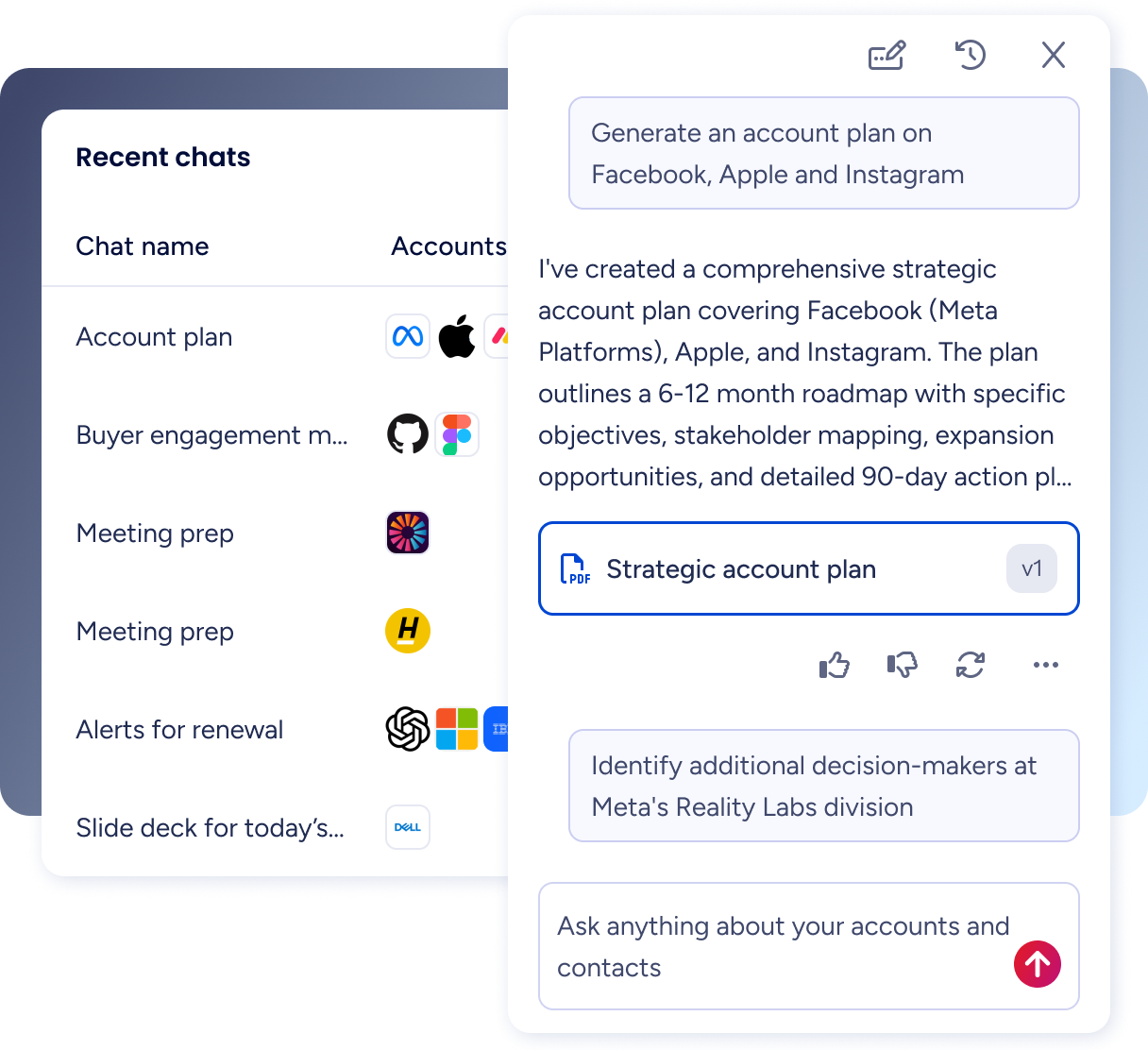
A typical workflow: RevOps filters the company dataset by industry, size, region and technology to count the ICP, exports the list to Salesforce, HubSpot or Dynamics, and sets intent topics for the category. In GTM Workspace, a Pulse Feed shows sellers up to 1,000 daily signals across 15+ signal types on their accounts, and website-visitor matches can alert a rep in Slack, Teams or email. An exported record stays updated for 365 days without using another credit. The MCP server works with Claude, ChatGPT, Cursor and Codex, and requires a GTM.AI self-serve or Enterprise license.
- Starting price
- Platform packages by quote; GTM.AI free start with 1,000 data and 1,000 AI credits, then prepaid credits from $20
- Companies
- 100M+ (data page: 122M+)
- Intent topics
- 4,500+
- Technographics
- 30K+ products tracked
- AI assistants
- MCP for Claude and ChatGPT (GTM.AI self-serve or Enterprise license)
6sense
Best for predicted buying stage
6sense is built on intent: first-party web visits, research on review sites such as G2 and TrustRadius, third-party research activity and partner intent from Bombora, matched to 75M+ company profiles and 750M+ buyer profiles.
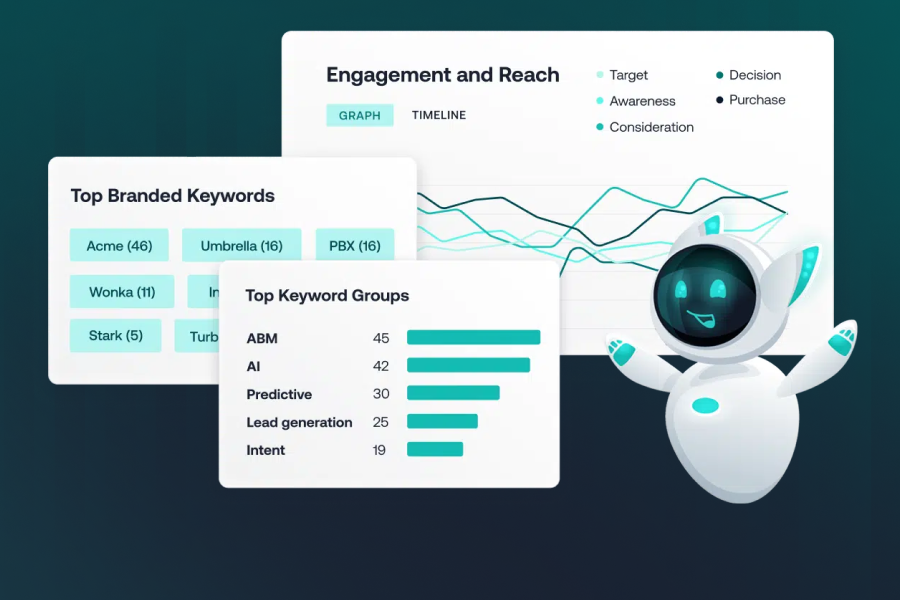
The market intelligence job 6sense does is narrowing the market to the accounts in an active buying cycle. Its predictive models assign each account a buying stage and a 6QA status (its term for a qualified account), so marketing can spend on the accounts furthest along and sales can see who is researching before anyone fills in a form.
On TrustRadius, 21% of recent reviewers praise intent data for prioritizing accounts, and 26% mention data accuracy as a problem, especially contact details and the reliability of intent signals. 6sense's own pages give two different signal volumes (500B+ a month on one page, a trillion a day on another), so it's worth asking for the coverage of your segment instead of the total.
- you run account-based marketing and want intent plus a predicted buying stage per account
- you can give an admin time to maintain keyword lists, segments and models
- you want a free or self-serve start: the pricing page shows only demo-gated bundles
- you need market sizes or industry research rather than account-level intent
- Users like
- Intent data for account prioritization
- Users dislike
- Data accuracy of contacts and intent, and a complex interface
- Source: G2, 1,570 reviews
How it works in practice
A typical workflow: marketing defines keyword lists for the category, 6sense matches research activity to accounts, and accounts that reach a decision stage show up for sellers in the CRM, the sales engagement tool and the Chrome extension. The Salesforce connection syncs nightly through an app, according to 6sense's support documentation. In July 2026 6sense opened an MCP server in beta for Revenue Marketing customers, exposing buying stage, 6QA status and keyword intent to Claude, ChatGPT and other agents. The three Sales Intelligence bundles on the pricing page are all demo-only.
- Starting price
- Quote only (three Sales Intelligence bundles, demo required); the free Sales Intelligence tier was removed in July 2026
- Companies
- 75M+ profiles in 200+ countries
- Buyer profiles
- 750M+
- CRM sync
- Salesforce, nightly
- Intent partners
- Bombora, G2, TrustRadius
- TrustRadius
- 8.3 out of 10 (554 ratings)
Demandbase
Best for ABM teams that run ads
Demandbase pairs B2B account and contact data (100M+ companies and 176M+ contacts in its 2025 data sheet, 47K+ technologies tracked) with intent it reads from the bidstream of its own B2B ad platform.
Because the intent comes from ad auctions, Demandbase sees which companies read content on a topic across the web, rolls that up to accounts and buying groups, and can then target those accounts with ads from the same system. For GTM teams that run account-based programs, this keeps the market view and the activation in one place, while most other tools here stop at the data. It also finds buying-group members who aren't in your CRM yet.
Pricing is a platform fee plus a flat fee per user, and Demandbase doesn't sell its marketing or sales products on their own. It does publish free planning tools, including a target account list calculator. Demandbase's own materials give different keyword counts for its intent data (400K, 575K+ and 810K+), so ask which one you're buying.
- marketing and sales run one account-based motion and want intent, buying groups and ads together
- reps should pull an account brief into Claude, ChatGPT, Gong or Outreach
- you don't have an ABM or RevOps owner: reviewers report a steep learning curve
- you mainly need contact lists: TrustRadius reviewers call person-level data thin
- Users like
- Intent data for prioritizing accounts
- Users dislike
- Steep learning curve and thin person-level contact data
- Source: G2, 2,018 reviews
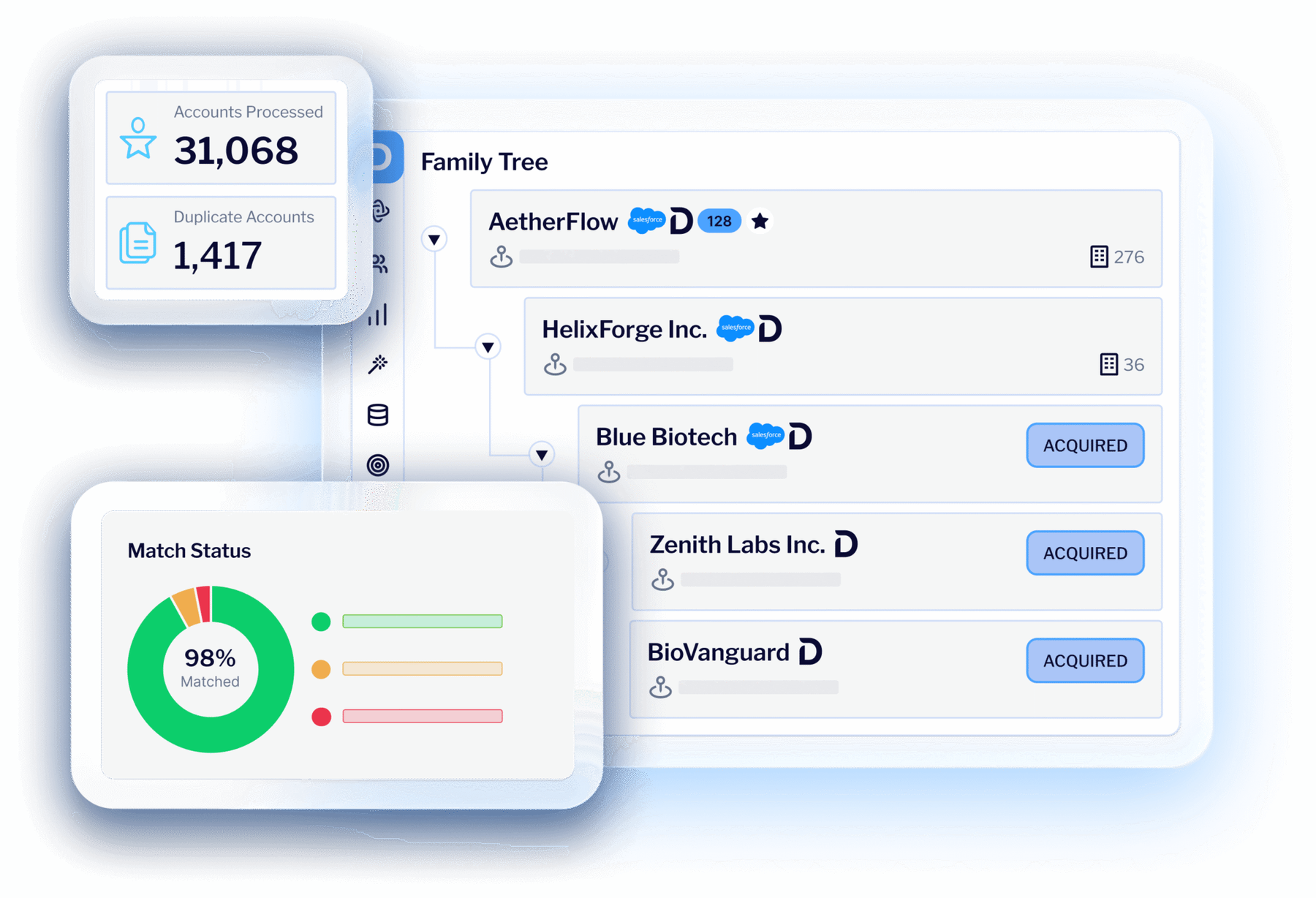
How it works in practice
A typical workflow: marketing builds a target account list, Demandbase scores accounts on intent and engagement, and sellers see in-market accounts and buying-group members in Demandbase Sales, Salesforce or HubSpot. The MCP server is read-only and respects user permissions; a full account brief costs one credit, and Demandbase documents setup for ChatGPT, Claude, Gemini, Gong, Copilot Studio, Outreach, Slack and VS Code. APIs cover export, import and intent (beta).
- Starting price
- Quote only: platform fee plus a flat fee per user; Marketing or Sales not sold on their own
- Companies
- 100M+ (2025 data sheet)
- Contacts
- 176M+
- Technologies tracked
- 47K+
- MCP
- Read-only, 1 credit per record
- CRM
- Salesforce enrichment, HubSpot App Cards
Similarweb
Best for digital demand and share
Similarweb estimates web traffic, search demand and audiences for websites and apps, and its Market Research module turns that into market views for more than 200 predefined industries.
It's market intelligence measured in attention, not dollars. Market Overview sizes an industry by unique visitors and monthly visits and adds a Market Difficulty score; the Players view shows traffic leaders and who is rising or losing share; Demand Analysis looks at search demand. For a product marketer, that answers questions such as whether a category's audience is growing and which players are winning it online.
The self-serve plan costs $125 per month billed annually or $199 monthly for one user with three months of history. The market research analysis sits in the Competitive Intel Suite on the business packages, which is priced by quote, and the packages page doesn't say whether the self-serve plans include it. If market views are the reason you're buying, ask first.
- you want to see whether a category's digital audience and search demand are growing, and who is gaining share
- you want a published entry price for one user
- you sell into categories where buyers rarely research on public websites
- you need market size in revenue or an account list: traffic share is not revenue share
- Users like
- Traffic and competitor analysis
- Users dislike
- Price, and data accuracy for smaller sites
- Source: G2, 1,175 reviews
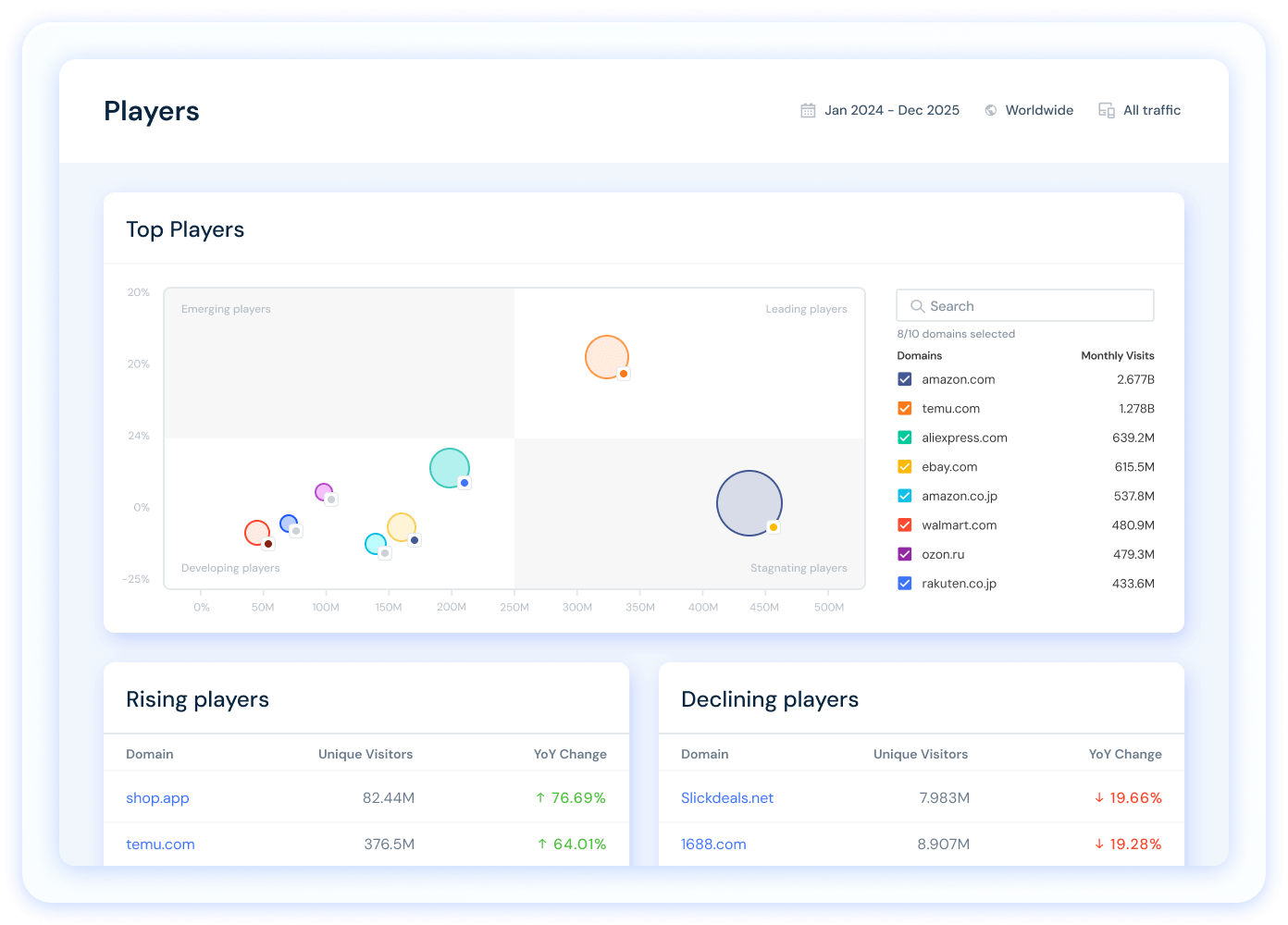
How it works in practice
A typical workflow: a PMM picks an industry or builds a custom market from a list of sites, checks Market Overview for audience size and trend, and uses the Players view to see who is gaining. Exports and the API move the numbers into planning models. Similarweb also sells a separate Sales Intelligence product with 100M+ contacts. Its MCP server works with Claude, ChatGPT, Perplexity and Cursor, but requires an account with API access.
- Starting price
- From $125 per month billed annually ($199 monthly); business plans by quote
- Entry plan
- 1 user, 3 months of history
- Business
- Up to 37 months, 100+ countries, APIs
- CRM
- Salesforce and HubSpot via Integrations Hub
- Industries
- 200+ predefined
- AI assistants
- MCP for Claude and ChatGPT (needs API access)
Valona Intelligence
Best for monitoring industrial markets
Valona Intelligence monitors 200,000+ sources in 115+ languages, including paywalled publications, licensed trade media and financial and trade-flow data, and adds analysts on top.
Valona covers competitors, trends, regulation and emerging risks, and says its deepest coverage is in manufacturing-heavy sectors: chemicals, automotive, food and beverage, industrial equipment and medical devices. After its September 2025 merger with A-INSIGHTS it also lists market sizing across segments, regions and product categories. Agentic trend radars flag weak signals, and dashboards give each team a standing view.
The service layer is what's really unusual here. Valona offers a dedicated analyst team or on-demand hourly analysts who collect and validate information, run secondary research and produce market reports in local languages. That's a good fit for a team without its own research staff. Prices for the platform and the analyst services aren't published.
- you sell into industrial or manufacturing markets and need monitoring across languages and trade sources
- you want analysts to curate the feed rather than staffing that yourself
- you need a published price or a self-serve start
- you sell software to tech buyers and need intent or account lists
- Users like
- User-friendly interface and strong answer quality
- Users dislike
- Occasional lag and freezing
- Source: G2, 5 reviews

How it works in practice
A typical workflow: the team sets saved searches for its markets and competitors, receives alerts as a weekly overview, daily update or in real time, and sends a branded newsletter to sales and leadership. Valona says its intelligence can also be brought into enterprise AI tools through MCP. Its G2 rating rests on only 5 reviews, so the Capterra page (4.6 from 12 reviews in search results) is a useful second view.
- Starting price
- Quote only
- Sources
- 200,000+ sources, 115 languages
- Merger
- A-INSIGHTS, announced September 4, 2025
- Delivery
- Email, Teams, Salesforce, MCP server
- Languages
- 115+
- Analyst services
- Dedicated or on-demand hourly
What Data Each Tool Is Built On
Each tool in this guide is built on a different dataset, and the table below compares them side by side. Counts are the vendors' own published figures, checked October 20, 2026, and several vendors publish different totals on different pages. Use them to understand scale and collection method, but test coverage of your own segment before you trust them.
| Tool | Built on | Published coverage | How it's collected | Refresh |
|---|---|---|---|---|
| AlphaSense | Documents and expert calls | 500M+ documents; 8K+ expert transcripts added a month | Licensed content, filings, broker research, expert interviews | Continuous; real-time alerts |
| Statista | Statistics and modeled market sizes | 1,000+ markets in 190+ countries | Statista analysts using international organizations' data | Market Insights twice a year |
| CB Insights | Private company and deal data | 13M+ companies, 1.5M deals | Data collection plus investor-reported deals (20%) and analyst briefings | Daily briefings and alerts |
| PitchBook | Private capital data | 13.4M+ companies, 3.2M+ deals, 667K+ investors | 1,800+ person data operations team, surveys, filings | Several times a day |
| Crunchbase | Private company data and predictions | 4M+ private companies | Analysts, partners, news, filings, user signals | 30M+ updates a year |
| ZoomInfo | Company, contact, technographic and intent data | 100M+ companies, 500M+ profiles, 4,500+ intent topics | Crawlers, public records, email metadata, research teams | Technographics on a 60-day average cycle |
| 6sense | Intent and buyer data | 75M+ companies, 750M+ buyer profiles | Web visits, review sites, third-party research, partners | Nightly CRM sync |
| Demandbase | Account data and ad-based intent | 100M+ companies, 176M+ contacts (2025 sheet) | Own B2B ad platform bidstream, data partners | Continuous intent scoring |
| Similarweb | Web traffic and search demand | 200+ predefined industries | Traffic data models | Not stated on the pages we read |
| Valona | Monitored news, trade and financial sources | 200,000+ sources, 115+ languages | Source monitoring plus analysts | Real-time, daily or weekly alerts |
What Market Intelligence Software Costs
Market intelligence software costs anywhere from a free account to an enterprise contract. Three tools in this list publish dollar prices: Statista (Starter $199 and Personal $649 per month billed annually), Crunchbase (Pro from $49 per month billed annually in the first year, Business from $199) and Similarweb (from $125 per month billed annually). ZoomInfo's GTM.AI offer starts free and then sells prepaid credits. Everything else is quote only. And even where prices are published, the entry plans rarely include the data that really makes these tools worth buying.
| Tool | Published price (USD) | What the entry plan leaves out |
|---|---|---|
| Statista | Free Basic; Starter $199, Personal $649 per month billed annually | Market Insights (market sizing) starts at the quote-only Professional plan |
| Crunchbase | Free account; Pro $49 per month (year one, billed annually) or $99 monthly; Business from $199 | CRM integrations and higher export caps start at Business |
| Similarweb | $125 per month billed annually or $199 monthly | Market research analysis is listed in the quote-only Competitive Intel Suite |
| ZoomInfo | Free start with 1,000 data and 1,000 AI credits via GTM.AI; data credits $0.38 at the $1,000 tier | Platform packages for sales and marketing teams are quote only |
| AlphaSense, CB Insights, PitchBook, 6sense, Demandbase, Valona | Quote only | Trials: CB Insights 10 days; PitchBook on request |
Is There Free Market Intelligence Software?
Yes, though free plans cover lookups, not market sizing or intent. Crunchbase's free account includes company profiles, search, AI research and its MCP with usage limits. Statista's Basic plan includes free statistics and five Research AI questions. ZoomInfo's GTM.AI starts with free credits. Demandbase publishes free planning calculators, including one for target account lists. Outside these vendors, alerts on company names in a news reader and the free review pages on G2 cover basic monitoring.
Where Battlecard Tools Like Crayon and Klue Fit
Crayon and Klue often appear in market intelligence lists, and Crayon shows up in Google's related searches for the term. Both are competitive intelligence platforms: they track named competitors' websites, pricing pages, news and reviews, and turn the findings into battlecards inside the CRM and chat tools. Crayon's own pages describe it as competitive intelligence software, and its AI market landscape prompt works over the competitors you track, not the whole market. But neither one offers market sizing or account lists.
Use them when the question is "what did this competitor change, and what should sellers say about it?" Our competitive intelligence software guide compares Crayon, Klue and seven other tools on that job. Many teams run one tool from each side: a market data source for planning and a battlecard tool for deals.
How to Run a Two-Week Market Intelligence Pilot
A two-week market intelligence pilot tests a tool on your own segment, which a demo won't. A demo will, of course, show you the vendor's best segment. The pilot shows whether the data holds up where you'll actually sell. Most vendors here offer a trial or a free tier, so two weeks is usually enough.
Write down one market question
Pick a decision you need to make this quarter, such as which mid-market segment to prioritize or how many accounts fit a new ICP. One question keeps the pilot honest, and it's easier to compare tools against it.
Pull the same segment from two tools
Run the identical filter (industry, region, size, technology) in two tools from the right data family. Compare the counts, but also spot-check 20 companies you know well, since totals hide gaps.
Match the results against your CRM
Check what share of the tool's list already exists in your CRM, and how many of your closed-won accounts the tool would have found. A low match rate is a coverage warning, even if the totals look big.
Test the way out
Export a list, sync a few records and ask the AI assistant connection one real question. Note every limit you hit: export caps, credits, missing fields.
Decide with the owner in the room
Bring the person who will maintain the tool into the decision, along with the contract terms you collected in the demo.
Where The GTM Lead Fits
The GTM Lead fits after the market data: none of these tools tells you whether your revenue team can explain what the data changed. When market intelligence leads to new positioning, a new segment or new pricing, someone has to brief SDRs, AEs and CSMs and know who is ready before customers ask. That's the one job The GTM Lead does: it sends a release brief with approved messaging and "do not say" caveats, asks a one-question readiness check and shows who is ready. It doesn't collect market data and isn't a ranked tool in this guide.
FAQ
What is the best market intelligence software?
The best market intelligence software depends on the question you need answered. For a sourced market size, Statista's Market Insights; for cited industry research, AlphaSense; for mapping private players, CB Insights, PitchBook or Crunchbase; for target accounts and intent, ZoomInfo, 6sense or Demandbase; for digital demand, Similarweb; for monitoring industrial markets, Valona.
What are some examples of market intelligence tools?
Market intelligence tools come in four families. Common examples are AlphaSense and Statista (research and market size), CB Insights, PitchBook and Crunchbase (private company data), ZoomInfo, 6sense and Demandbase (accounts and intent), Similarweb (web demand) and Valona (market monitoring).
What is the difference between market intelligence and business intelligence?
Market intelligence uses external data about your market: companies, buyers, competitors and trends. Business intelligence analyzes your own internal data, such as pipeline, revenue and product usage. Most GTM teams need both.
How much does market intelligence software cost?
Market intelligence software costs from $0 to quote-only enterprise contracts. Published prices start at $49 per month for Crunchbase Pro (billed annually, first year), $125 per month for Similarweb and $199 per month for Statista Starter, both billed annually. Market sizing, intent and CRM sync usually sit in quote-only plans.
Is there free market intelligence software?
Free market intelligence software exists, with limits: free plans are good for checking a company or a statistic, not for planning a segment. The cost section above lists the free tiers from Crunchbase, Statista, ZoomInfo and Demandbase.
Can market intelligence tools work inside Claude or ChatGPT?
Market intelligence tools can work inside Claude or ChatGPT: all ten tools in this guide describe an MCP or connector route for AI assistants, but terms differ: AlphaSense and 6sense are in beta, PitchBook needs extra licenses, Similarweb needs API access, and Statista, Demandbase and ZoomInfo meter usage in credits.