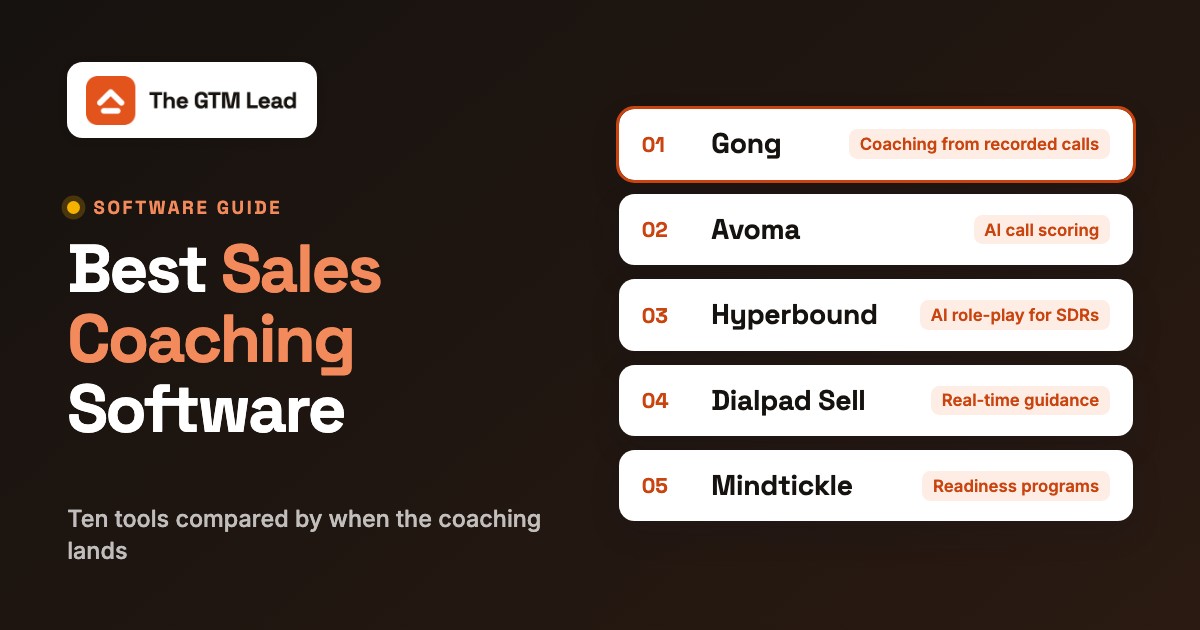
Sales coaching software records or simulates sales conversations, scores them against the standard your team sells to, and turns the gaps into feedback and practice for each rep. The best tool for you depends on when the coaching has to happen: after a recorded call, before the call in an AI role-play, during a live phone call, or across a whole readiness program.
This guide compares ten tools by how one coaching loop runs inside each of them: where the evidence comes from, who gives the feedback, how the rep practices the fix and how a manager can see it worked. We read every vendor's pricing, product and help pages and a review source on October 21, 2026, and we name the plan that unlocks the coaching features, because that's where most quotes get expensive.
- tools compared
- 10
- coaching moments: before, during and after the call, plus program level
- 4
- publish a dollar price (Avoma, Dialpad Sell)
- 2 of 10
- include AI role-play practice
- 6 of 10
Best Sales Coaching Software: Our Picks
We picked each tool for one coaching problem it handles better than the rest of this list, based on its plan gates, its review data and how much of the coaching loop it covers. Most B2B teams start with one tool that scores real calls and add a role-play tool later; very few need all four kinds at once.
 Best for coaching from recorded callsGongManager scorecards with AI Call Reviewer suggestions, a coaching inbox per rep, and AI Trainer role-plays built from your own past calls.
 Best published price for AI call scoringAvomaThe coaching add-on is $29 per seat per month billed annually and scores every call against MEDDIC, BANT, SPICED, SPIN or your own scorecard.
 Best for ZoomInfo customersChorus by ZoomInfoScorecards, Smart Playlists and coaching initiatives tied to your methodology, from the vendor that already holds your contact data.
 Best AI role-play for SDRsHyperboundA free plan with 45 prebuilt role-plays; the Perform plan scores real calls and turns them into short practice scenarios.
 Best for pitch and demo certificationSecond NatureScores practice sessions in 45 to 90 seconds and lets you set pass thresholds before a rep goes live.
 Best real-time coaching on a published priceDialpad SellLive Coach cards from $59 per user per month and AI scorecards at $79, inside its own sales dialer.
 Best for high-volume phone sales floorsBaltoLive prompts during calls and a QA score on every call seconds after hang-up, on top of your existing phone system.
 Best for enterprise readiness programsMindtickleAI role-play, call scoring and a Readiness Index that compares each rep with an ideal profile.
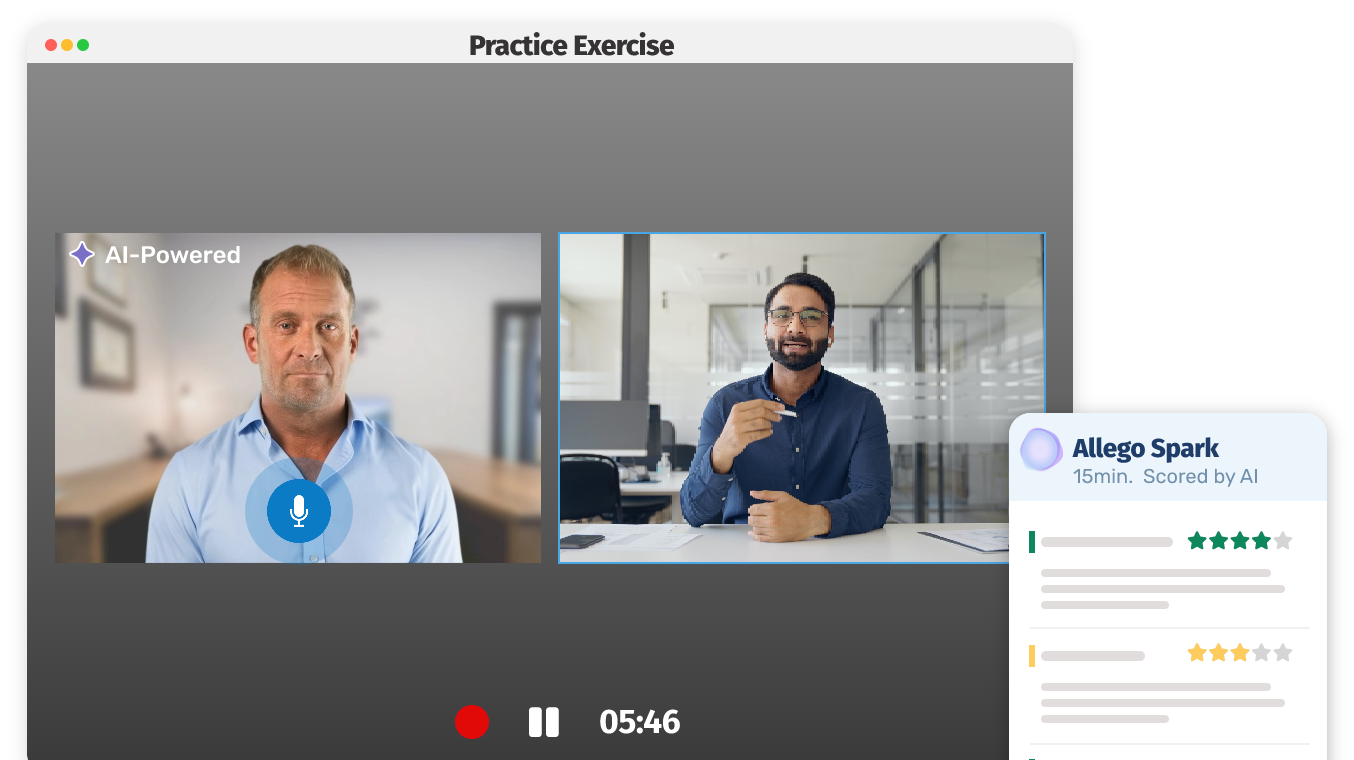
 Best for multilingual video practiceAllegoAI role-plays scored on one shared rubric, with manager side-by-side review of attempts.
 Best if coaching should live with your contentHighspot by SeismicRole-play and scorecards tied to your own skill framework, inside the Highspot by Seismic enablement suite.
Sales Coaching Software Compared
| Tool | Type | How the coaching happens | Price (USD) | Rating |
|---|---|---|---|---|
| Gong | Conversation intelligence with AI practice | Scorecards and timestamped comments on recorded calls; AI Trainer role-plays in Gong Enable | Quote only (per-user license plus a platform fee); coaching access depends on the Enable Essentials or Enable plan | 4.7 (6,522) |
| Chorus by ZoomInfo | Conversation intelligence | Manager scorecards, Smart Playlists and recommended top calls for call shadowing | Quote only; not listed in ZoomInfo's published package tiers | 4.5 (2,988) |
| Avoma | Conversation intelligence | AI scores every call against a methodology scorecard with timestamped reasons; weekly coaching digest per rep | Startup $19 per recorder seat per month billed annually; Enterprise $39 billed annually (10 seats minimum); Conversation Intelligence add-on with coaching $29 per seat per month billed annually ($35 monthly); viewers free; 14-day trial | No reviews yet |
| Hyperbound | AI role-play with real-call scoring | AI buyer role-plays scored on your scorecard; Perform adds real-call scoring and practice built from deal signals | Free plan (45 prebuilt AI role-plays, example scorecards); Practice and Perform by quote, priced per user | 4.9 (40) |
| Second Nature | AI role-play | AI persona conversations scored on knowledge and style within 45 to 90 seconds; certification thresholds | Quote only (no public pricing page) | 4.6 (366) |
| Dialpad Sell | Real-time call guidance in a sales dialer | Live Coach cards and playbook checks during the call; AI scorecards and Coaching Hub after it | Essentials $39, Advanced $59 (adds Live Coach), Premium $79 (adds Scorecards, Playbooks, Coaching Hub) per user per month | 4.4 (4,697) |
| Balto | Real-time call guidance and QA | Live prompts during phone calls; every call scored on a QA scorecard seconds after hang-up | Quote only (per agent seat, annual) | 4.8 (587) |
| Mindtickle | Sales readiness platform | Call AI scoring, AI role-play and a Readiness Index per rep | Quote only (no public price list) | 4.7 (2,399) |
| Allego | Learning, coaching and content platform | AI role-play scored on a shared rubric, manager review and conversation intelligence | Quote only (per user per month, billed annually) | 4.6 (695) |
| Highspot by Seismic | Enablement platform | Meeting capture, AI role-play and scorecards tied to your skill framework | Quote only (Good, Better, Best packages) | 4.7 (1,206) |
 The GTM Lead Our product | Release enablement acknowledgements | Shows which SDRs, AEs and CSMs are ready to explain a product change | Access code | No reviews yet |
Prices and plans checked on vendor pages on October 21, 2026. G2 blocked direct access, so ratings for Gong, Chorus, Hyperbound, Second Nature, Dialpad and Balto are the G2 figures shown in search results on October 21, 2026; Mindtickle, Allego and Highspot are from our October 17 check. Dialpad's rating covers the whole Dialpad product, and Hyperbound's rests on about 40 reviews. We found no G2 rating for Avoma.
What Sales Coaching Software Does
Sales coaching software captures what a rep actually says to a buyer, scores it against a standard and helps a manager turn the weakest moment into practice. Gong's own definition, which Google's AI Overview quotes for this keyword, puts it as capturing, analyzing and surfacing insights from real customer interactions. That's only half of it, though. The tools that actually change behavior also close the loop in four steps.
- The tool collects evidence: a recorded call, a live call or a role-play attempt.
- AI, a manager or both give feedback on a scorecard and mark the moment that cost the deal.
- The rep practices that moment, in a role-play or on the next real call.
- Scores over time are the proof that the behavior changed, rep by rep.
Every tool in this guide covers at least two of those steps. None covers all four equally well, which is why the reviews are grouped by the step each tool is strongest at.
The Four Kinds of Sales Coaching Tools
| Kind of tool | When the coaching lands | Evidence it uses | Tools in this guide |
|---|---|---|---|
| Conversation intelligence | After the call | Recorded calls and meetings | Gong, Chorus by ZoomInfo, Avoma |
| AI role-play | Before the call | Practice sessions with an AI buyer | Hyperbound, Second Nature |
| Real-time guidance | During the call | The live call itself | Dialpad Sell, Balto |
| Readiness platform | Across a program | Role-plays, courses and some call data | Mindtickle, Allego, Highspot |
The categories are blurring. Gong now sells AI role-play in Gong Enable, Hyperbound scores real calls on its top plan, and Highspot captures meetings. Still, each tool started in one of these four places, and that origin shows in what it does best. If your main need is courses, quizzes and certification rather than call review, our guide to sales training software covers that side.
Coaching Software vs Sales Enablement and Training Software
Training software teaches a rep what to say. Coaching software checks whether they say it on real calls and helps them fix the gap. Enablement suites such as Highspot, Seismic and Mindtickle do both, plus content management, which is why they cost more and take longer to roll out. If you mostly need content and launch plays, our guide to the best sales enablement software is the better starting point.
Which Tool Fits Which Coaching Problem
Start from the problem you'd like to fix, not from the feature list. This table maps common coaching problems to the kind of tool that fixes them and the plan you'd need for it.
| Coaching problem | What fixes it | Where to find it |
|---|---|---|
| Managers don't have time to listen to calls | AI scores every call first, managers review the lowest scores | Avoma Conversation Intelligence add-on; Gong with AI Call Reviewer |
| New SDRs freeze on cold calls and objections | Repetitions with an AI buyer before live calls | Hyperbound Practice (or the free plan to test); Second Nature |
| Reps skip discovery steps on live phone calls | Prompts during the call and a checklist of steps | Dialpad Sell Advanced for Live Coach, Premium for playbooks and scorecards; Balto |
| You can't prove reps are ready for a new pitch | Role-play with a pass threshold and certification | Second Nature; Mindtickle; Highspot Best |
| Coaching differs by manager and region | One rubric applied to every call and role-play | Allego; Avoma custom scorecards; Gong scorecards |
| Top reps' calls never reach new hires | Curated libraries of good calls | Chorus Smart Playlists; Avoma playlists; Gong |
| Feedback on calls doesn't turn into practice | Practice built from a real call moment | Gong Enable AI Trainer; Hyperbound Perform; Allego |
How to Choose Sales Coaching Software
Six questions sort this market faster than any feature grid.
- Does it coach, or does it only record? A call recorder with transcripts clearly isn't coaching software. Look for scorecards, a place where feedback reaches the rep, and a way to assign practice.
- Where does the coaching land? Phone-heavy SDR teams get the most from real-time prompts and role-play. Field and enterprise AEs who sell in Zoom or Teams meetings get more from post-call scoring.
- Who fills in the scorecard? If managers must score calls by hand, they'll score a few. If AI scores every call, check that it explains each score with a timestamp so a manager can trust or overrule it.
- Which plan unlocks coaching? Scorecards, role-play and coaching dashboards often sit in an add-on or the top tier. Ask for the package name in writing.
- Does it fit where calls happen? Check your meeting platform (Zoom, Microsoft Teams, Google Meet), your dialer and your CRM. Some tools only coach calls placed in their own dialer.
- Will reps trust it? Reps read call recording as surveillance when scores show up on a leaderboard before anyone has explained them. Tell the team what gets recorded, who sees each score and what the scores are used for, and keep them out of performance reviews for the first quarter. Some tools help: in Gong, the manager chooses who can see a completed scorecard.
- Upload or record one real discovery call from your team
- Build your own scorecard in the demo, not the vendor's template
- Check that every AI score links to the moment in the call
- Assign a role-play or clip from that call to a test rep
- See where the rep receives feedback (email, Slack, CRM, app)
- Ask which plan includes each step you just used
- Ask how call recordings are stored and for how long
Coaching After the Call: Conversation Intelligence
Conversation intelligence tools record calls and meetings, transcribe them and score them, so managers coach from what really happened instead of a rep's summary. They're the backbone of most coaching programs. But there's a limit: the rep only practices the fix on the next live call, unless the tool adds role-play. If call analysis is all you need, our guide to conversation intelligence software compares nine tools on trackers, plan gates and call sources.
Gong
Best for coaching from recorded calls
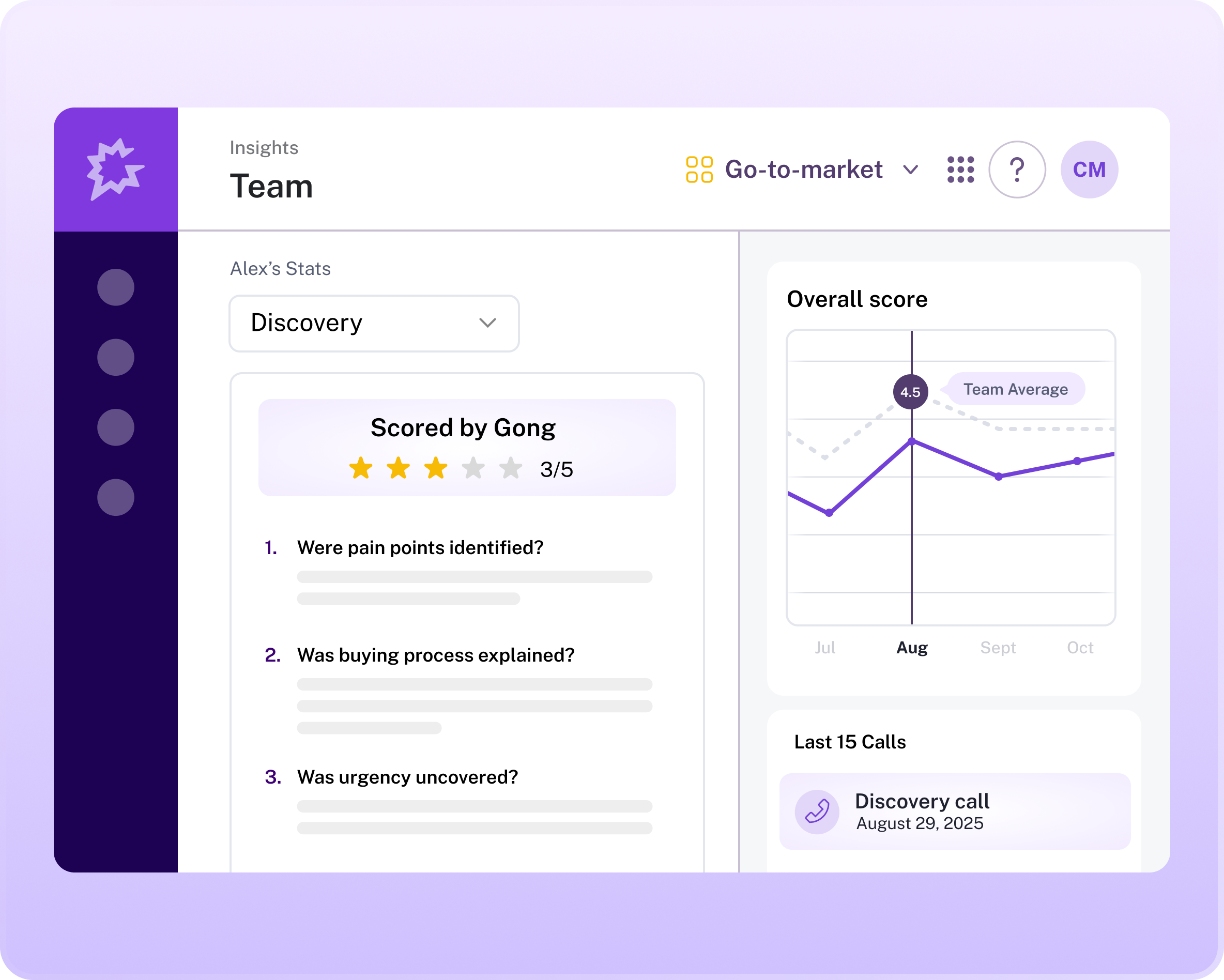
Gong records and transcribes customer calls and meetings, and its coaching tools sit on top of that recording: scorecards, timestamped comments, a coaching inbox per manager and, in Gong Enable, AI role-play built from your own calls.
One coaching loop in Gong. A manager opens a rep's discovery call and fills in a scorecard. With AI Call Reviewer turned on, Gong reviews the full call and suggests the answers, which the manager adjusts before submitting. Comments are pinned to the exact moment in the call, so the rep hears the question they skipped instead of reading about it. Gong's help center suggests starting with one scored call per rep each week and reviewing the coaching inbox once a week; the inbox shows when each rep last got feedback and any open coaching requests.
Practice is where Gong has moved furthest. Gong Enable's AI Trainer turns past customer conversations into role-play scenarios with instant feedback, and Dry Run lets a rep rehearse with an AI version of the buyer before an upcoming meeting. Lessons combine short learning, practice and assessments.
The proof step is weaker than the rest. Coaching metrics show managers of managers how much coaching each team receives, and Initiative Tracking ties a behavior change to results. The Enable page doesn't describe a per-rep readiness score or certification, so if you need to sign off a rep on a new pitch, plan on a separate step.
- your reps sell in recorded Zoom, Teams or phone calls and managers will review them weekly
- you want role-play built from your own past calls, not generic buyer personas
- you're a team of a few reps that wants a published price: Gong sells per-user licenses plus a platform fee by quote
- you need a pass/fail certification per rep: Gong's Enable page doesn't describe one
- Users like
- Ease of use and support
- Users dislike
- Less tailored to small businesses
- Source: G2, 6,522 reviews
How it works in practice
Gong captures calls through calendar, CRM and communication integrations and says it connects to more than 300 tools. Pricing is per user plus a platform fee, quoted individually; the help center says access to coaching depends on the Enable Essentials or Enable plan, and the page carries a note that it may be out of date, so confirm the package in your proposal. G2 reviewers praise ease of use and support; a G2 comparison summary rates it as less tailored to small businesses than lighter tools. If you already run Gong Forecast, we covered that side in our guide to sales forecasting software. Gong's deal boards and deal scores are covered in our guide to deal management software.
- Starting price
- Quote only (per-user license plus a platform fee); coaching access depends on the Enable Essentials or Enable plan
- Coaching inbox
- Shows last feedback per rep and open coaching requests
- Practice
- AI Trainer, Dry Run and Lessons (Gong Enable)
- Help center rhythm
- Score one call per rep each week to start
- AI scoring
- AI Call Reviewer suggests scorecard answers
Chorus by ZoomInfo
Best for ZoomInfo customers
Chorus is ZoomInfo's conversation intelligence product: it records sales calls and meetings, lets managers score them and builds libraries of calls worth copying.
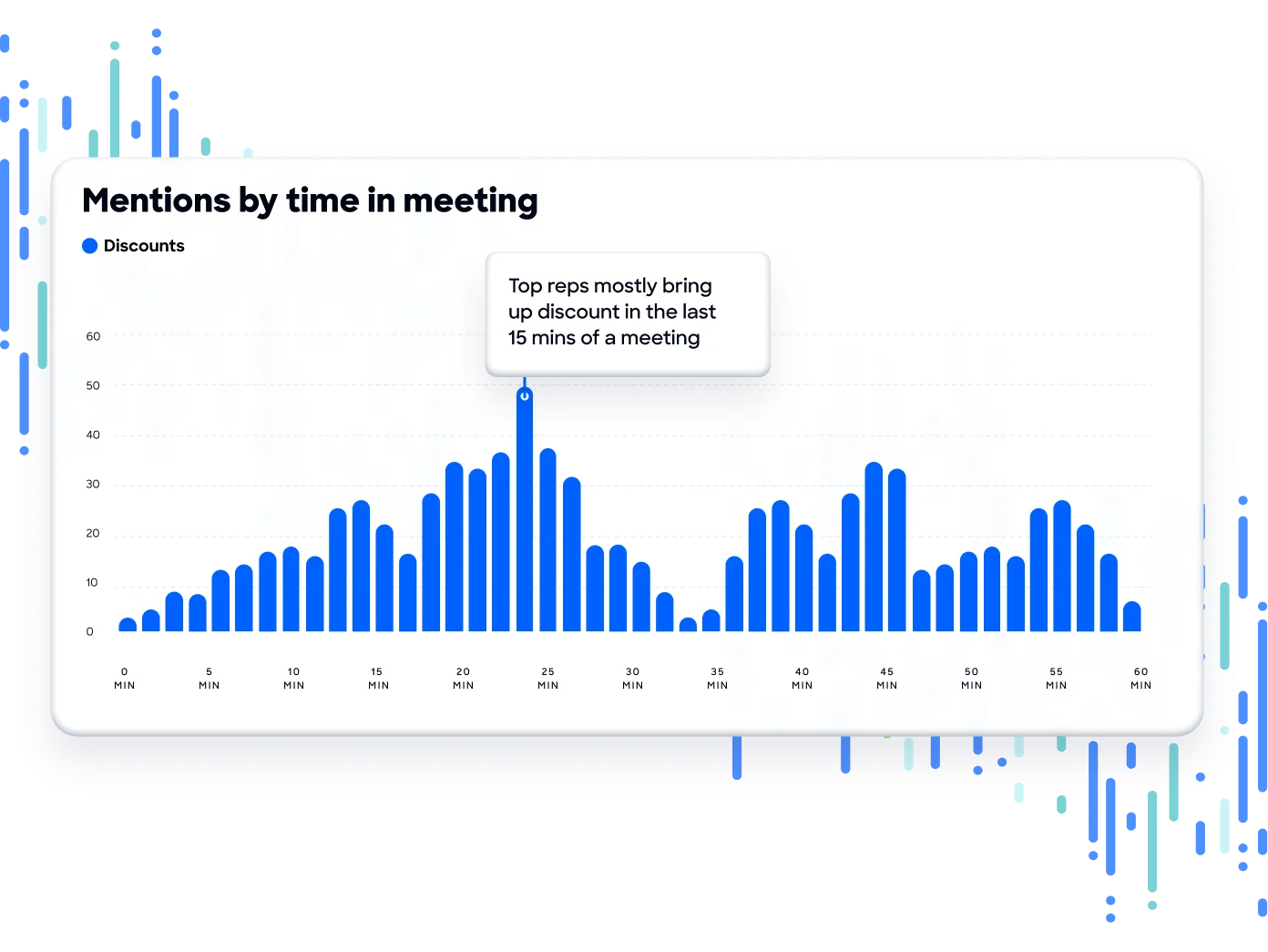
One coaching loop in Chorus. Chorus records the call and a manager rates it on a scorecard, leaving individual feedback for the rep. Instead of practicing with an AI buyer, the rep learns by call shadowing: Smart Playlists automatically collect new calls that match criteria you set, such as a strong pricing conversation, and Chorus recommends high-scoring calls for reps to review.
The part that suits structured sales teams is Coaching Initiatives. You configure them to match your methodology and then measure how closely reps follow the process and talk tracks. Managers see skill levels and rep activity to find who needs help first.
What's missing is the practice step. The Chorus coaching page describes no AI role-play, so the rep practices the fix on the next real call. Pair it with a role-play tool if your gap is new reps who aren't ready yet.
- you already buy ZoomInfo data and want call coaching from the same vendor
- you coach by call shadowing: playlists and recommended high-scoring calls do the curation
- you want AI role-play: the Chorus coaching page doesn't describe any
- you want to buy conversation intelligence on its own: ZoomInfo's published package tiers don't list Chorus and pricing is by quote
- Users like
- Call review and coaching
- Users dislike
- Steeper learning curve
- Source: G2, 2,988 reviews
How it works in practice
ZoomInfo's pricing page lists six packages by quote and doesn't include Chorus in any of them, so ask whether you can buy it alone or only with a data package; our ZoomInfo pricing breakdown explains how those packages and credits work. G2 users praise call review and the ability to revisit recordings and transcripts; G2's comparison summaries flag a steeper learning curve and support that answers more slowly than some rivals.
- Starting price
- Quote only; not listed in ZoomInfo's published package tiers
- Coaching initiatives
- Configured to your sales methodology
- Owner
- ZoomInfo (acquired 2021)
- Practice
- Call shadowing via playlists, no AI role-play described
Avoma
Best published price for AI call scoring
Avoma is an AI meeting assistant with a Conversation Intelligence add-on that scores every recorded call against a sales methodology and turns the gaps into coaching.
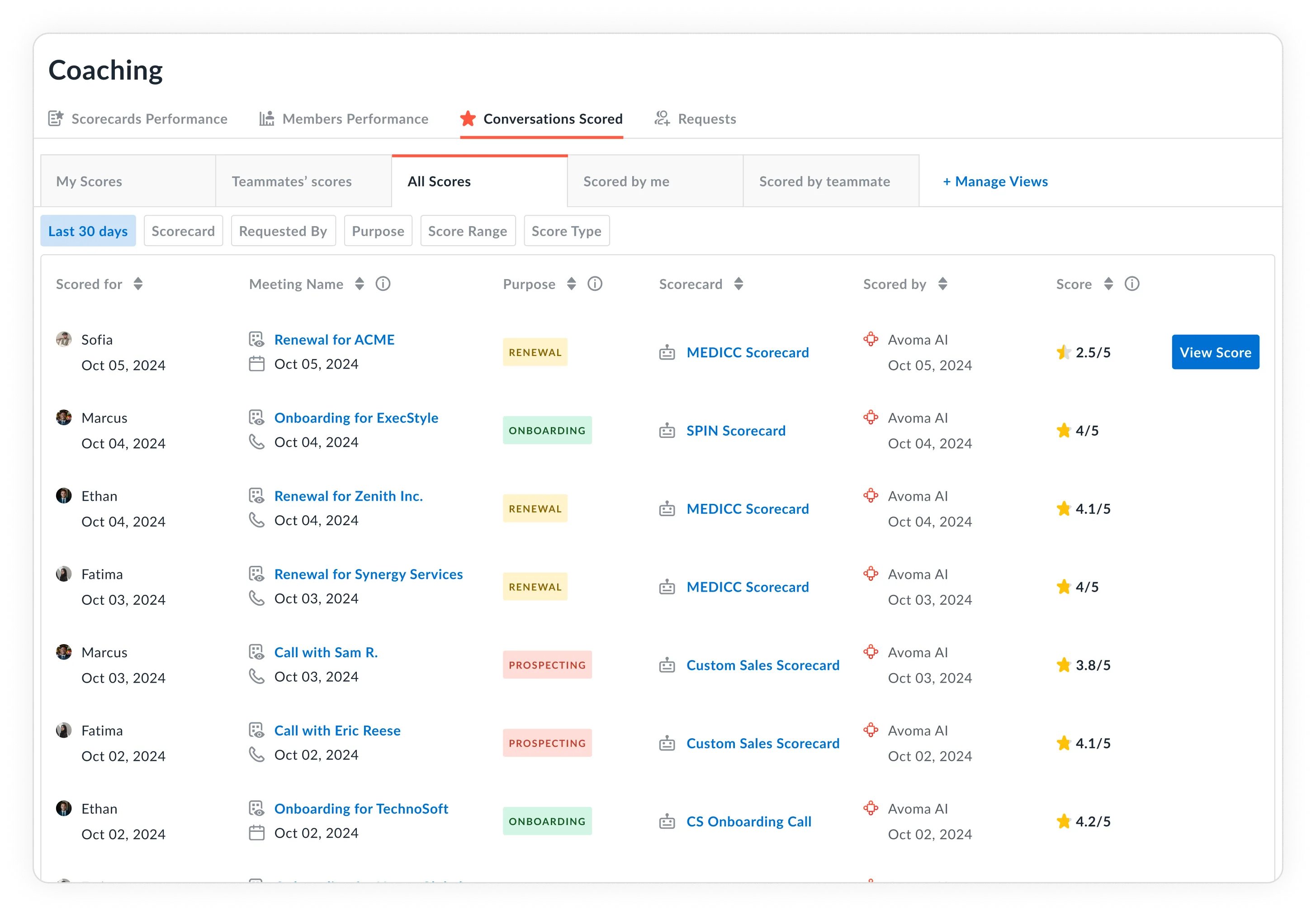
One coaching loop in Avoma. Avoma joins Zoom, Google Meet or Microsoft Teams meetings and records them. With the add-on, AI scores every call against a prebuilt MEDDIC, BANT, SPICED or SPIN scorecard or your own, and each score comes with a justification and a timestamp. Scorecards can be assigned by team, role or call type, so a discovery call isn't graded on demo criteria.
Because the AI scores first, a manager doesn't pick calls at random. They filter for the lowest-scoring calls, comment on the moments that matter and add the best examples to playlists sorted by skill, call type or deal stage. Reps get a weekly digest of their biggest gaps. A performance dashboard tracks score trends next to talk-to-listen ratio, filler words and monologue length, which covers the proof step.
There's no AI role-play. Practice happens through playlists of strong calls and on the rep's next live call.
- you want AI call scoring and coaching at a published per-seat price
- managers don't have time to pick calls: AI scores every call first and they review the lowest
- you need AI role-play or certification: Avoma scores real calls and builds playlists, it doesn't simulate buyers
- you expected coaching in the base seat: scorecards and AI coaching sit in the paid add-on
How it works in practice
Recorder seats start at $19 per month on Startup (billed annually) and $39 on Enterprise, billed annually with a 10-seat minimum. Viewers are free, so managers and enablement can watch calls without a seat. Call data and summaries go to Salesforce and HubSpot, and snippets can be shared in Slack. We couldn't find a G2 rating for Avoma; Capterra shows 4.8 out of 5, but from only six reviews. Reviewer comments quoted in other roundups mention weaker transcription on noisy calls, so test it on your own call recordings.
- Starting price
- Startup $19 per recorder seat per month billed annually; Enterprise $39 billed annually (10 seats minimum); Conversation Intelligence add-on with coaching $29 per seat per month billed annually ($35 monthly); viewers free; 14-day trial
- Scorecard templates
- MEDDIC, BANT, SPICED, SPIN or custom
- Recording
- Zoom, Google Meet, Microsoft Teams
- Coaching add-on
- $29 per seat per month billed annually, $35 monthly
- Trial
- 14 days of the Organization plan with add-ons
Gong vs Chorus vs Avoma for Coaching
All three score recorded calls, so the choice comes down to the practice step and how you buy. Gong is the only one of the three with AI role-play, through AI Trainer and Dry Run in Gong Enable, and it sells per-user licenses plus a platform fee. Chorus coaches by call shadowing and methodology-based Coaching Initiatives, and it makes the most sense if you already buy ZoomInfo data. Avoma has no role-play, but it's the only one of the three that lists its coaching price per seat on its pricing page, which makes it the easiest to pilot with one team.
Coaching Before the Call: AI Role-Play
AI role-play tools give reps a buyer to practice on before a real one hears the pitch. A rep runs a cold call, a discovery call or an objection, gets scored in seconds and tries again. They're strongest for ramping new reps and for rolling out a new pitch. Their limit: a role-play score is not the same as how the rep performs on live calls, so most teams pair them with call scoring.
Hyperbound
Best AI role-play for SDRs
Hyperbound runs AI buyer role-plays for cold calls, discovery, objections and demos, scores them on your scorecards and, on its top plan, scores real calls too.
One coaching loop in Hyperbound. On the Perform plan, Hyperbound captures real calls with its own recorder or pulls them from Gong, Zoom, Teams, Google Meet, Clari Copilot or Chorus, and scores them against your scorecard. When it spots a gap, such as a weak answer to a pricing objection, it generates a bite-sized role-play from that deal signal, and a manager can assign it. The rep practices against an AI buyer until the score clears, and analytics show skill trends across role-plays and real calls.
The role-play side covers the formats SDRs and AEs need: cold calls, discovery, objection handling, demos with live screen share, and buying-committee calls with several AI buyers. Bots can be built from a buyer's LinkedIn profile through a Chrome extension, and Hyperbound lists more than 30 languages.
The free plan is genuinely useful for testing this before a sales call: 45 prebuilt role-plays with example scorecards. It has no custom bots, reporting or real-call scoring.
- your SDRs need repetitions on cold calls and objections before they dial
- you want practice tied to real calls and already record them in Gong, Zoom, Teams or Meet
- you want real-call scoring on a published price: Perform is quote only, priced per user
- you need an LMS for courses: Hyperbound says it isn't one and connects to yours instead
- Users like
- Realistic simulations and ease of use
- Users dislike
- Minor bugs
- Source: G2, 40 reviews

How it works in practice
Hyperbound connects to Salesforce, HubSpot and Microsoft Dynamics, to Slack and Teams chat, to dialers such as Outreach, Salesloft, Aircall and Dialpad, and to LMS platforms including Mindtickle, Highspot, Allego and Seismic. The Practice plan adds custom buyer bots, custom AI scorecards and reporting; Perform adds real-call scoring, deal coaching and conversation intelligence. G2 reviewers praise realistic simulations and ease of use, and the main complaint is minor bugs, though the rating rests on about 40 reviews.
- Starting price
- Free plan (45 prebuilt AI role-plays, example scorecards); Practice and Perform by quote, priced per user
- Free plan
- 45 prebuilt AI role-plays, example scorecards
- Real-call scoring
- Perform plan only
Second Nature
Best for pitch and demo certification
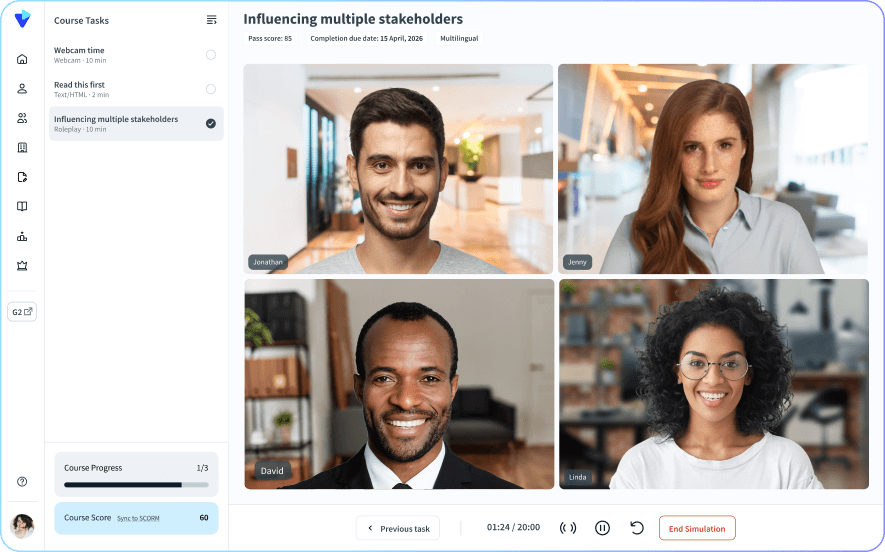
Second Nature has reps practice with AI personas by voice, webcam pitch, slide presentation or screen-share demo, then scores each session and lets managers certify reps against a pass threshold.
One coaching loop in Second Nature. Enablement builds a scenario in the course editor from an existing deck, PDF, Word document or audio file, using a MEDDPICC, BANT or SPIN template. The rep runs the conversation with an AI persona, and scoring arrives within 45 to 90 seconds. By default, knowledge (content accuracy, topic coverage) counts 70% and style (pace, clarity, energy, filler words) 30%, and you can change the weighting.
Managers can add their own score on the same rubric or a custom scorecard, and reps can ask for a score review if they think the AI got it wrong. Dashboards show completion rates and proficiency heatmaps by rep and team. Pass thresholds and manual evaluations turn a role-play into a certification, which is useful when a new product or pricing change must be explained the same way by every rep.
The pages we read describe practice sessions, not scoring of real recorded calls. Second Nature's homepage names a Deal Coach for live deals, without a detail page, so ask for a demo of it if call coaching matters.
- you certify reps on a pitch or demo before they go live
- you want to build scenarios from decks and documents you already have
- you want to coach from real recorded calls: the pages we read describe practice sessions only
- you want a published price or a small self-serve plan: there's no public pricing page
- Users like
- Skill development and ease of use
- Users dislike
- Voice recognition problems
- Source: G2, 366 reviews
How it works in practice
Second Nature connects to LMS platforms such as Cornerstone, Docebo, SuccessFactors and Adobe Learning Manager through SCORM or LTI, to Salesforce and HubSpot, and supports SAML single sign-on and SCIM user management. G2 reviewers mention skill development and ease of use as strengths; voice recognition problems are the recurring complaint.
- Starting price
- Quote only (no public pricing page)
- Default scoring
- 70% knowledge, 30% style (adjustable)
- Feedback time
- 45 to 90 seconds after a session
- Formats
- Voice, webcam pitch, slides, screen-share demo
Coaching During the Call: Real-Time Guidance
Real-time tools listen to a live call and prompt the rep while the buyer is still on the line: the next discovery question, the answer to an objection, a missed step. They pay off on high-volume phone teams where a manager can't hear every call. However, prompts help in the moment without building the skill, so they work best next to post-call scoring.
Dialpad Sell
Best real-time coaching on a published price
Dialpad Sell is a sales dialer and phone system with AI built in: live coaching cards prompt the rep during the call, and AI scorecards grade it afterward.
One coaching loop in Dialpad Sell. The rep places the call from Dialpad. When the buyer raises an objection, a Live Coach card pops up with talking points, and AI Playbooks check off methodology steps as they happen, using BANT, SPIN, MEDDIC, Challenger or SPICED, so the rep sees a missed step before hanging up. A manager can listen in, barge in or take over a live call. Our guide to sales playbook software shows where else a playbook can live, from the CRM record to a buyer-signal task.
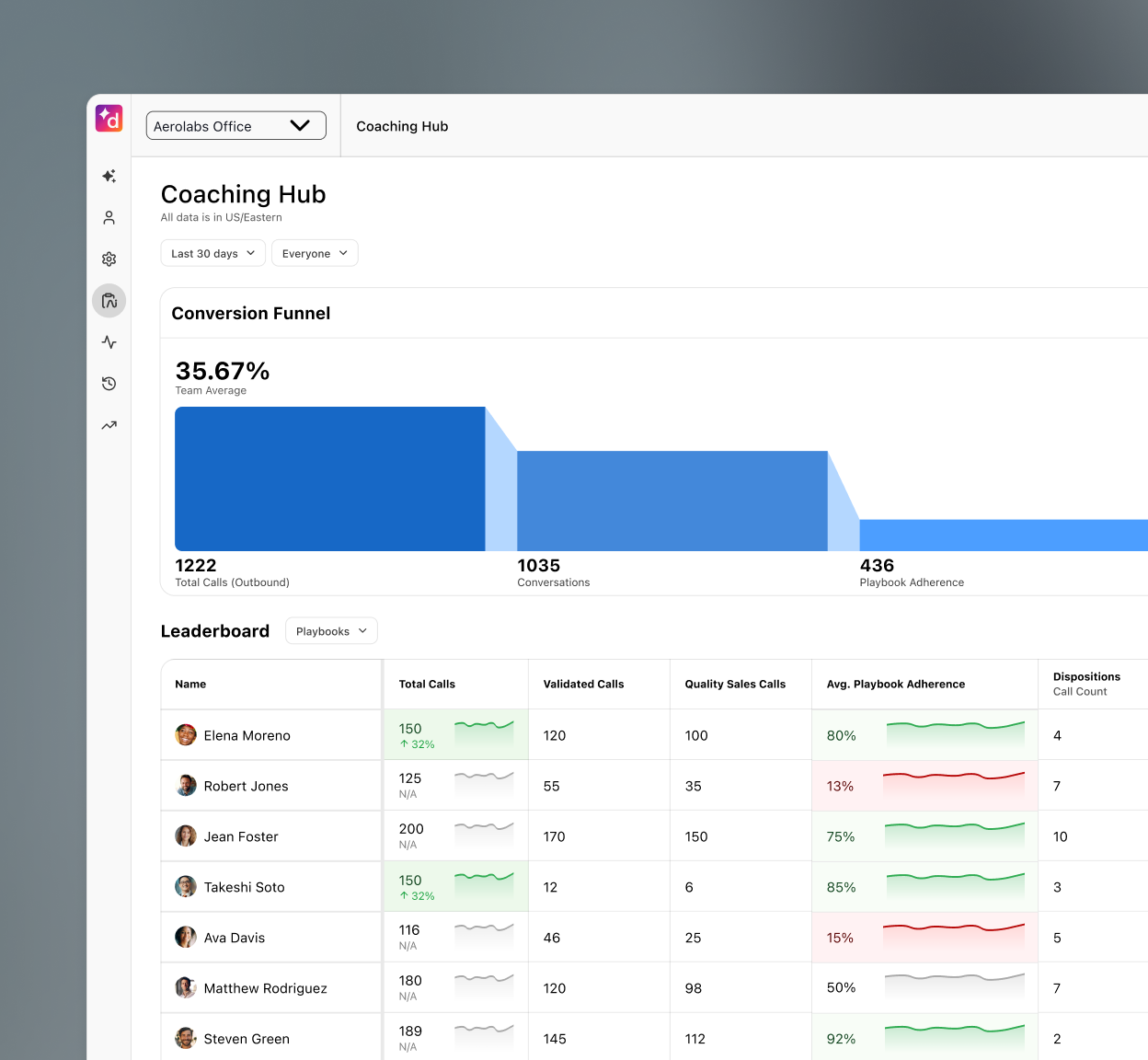
After the call, AI Scorecards grade it against your criteria, and the Coaching Hub gives supervisors a funnel, a leaderboard and widgets that surface calls with low playbook adherence. Managers can track adherence per rep over time, which is the proof step.
But coaching only runs on calls placed in Dialpad. If your team dials from another system or sells mostly in video meetings, you'd be switching phone systems to get the coaching.
- your reps live on the phone and you're open to running calls through Dialpad's dialer
- you want real-time prompts and scorecards at a published per-user price
- you're staying on another dialer or coach mostly Zoom meetings: the coaching runs on calls placed in Dialpad
- you need scorecards on a lower tier: they start at Premium
- Users like
- AI transcription and real-time AI
- Users dislike
- Glitches and a learning curve for advanced features
- Source: G2, 4,697 reviews
How it works in practice
Essentials ($39 per user per month) includes AI transcripts, call recording, CRM integrations and Coaching Teams. Dialpad lists sync with Salesforce and HubSpot, plus Microsoft Teams and Zendesk. The G2 rating covers all of Dialpad, not Sell alone: reviewers praise AI transcription and real-time AI, and mention glitches and a learning curve for advanced features.
- Starting price
- Essentials $39, Advanced $59 (adds Live Coach), Premium $79 (adds Scorecards, Playbooks, Coaching Hub) per user per month
- Playbook templates
- BANT, SPIN, MEDDIC, Challenger, SPICED
- Live manager tools
- Listen in, barge in, take over
- Live Coach
- Advanced plan, $59 per user per month
- Scorecards and Coaching Hub
- Premium plan, $79 per user per month
Balto
Best for high-volume phone sales floors
Balto sits on top of an existing phone or contact-center system, prompts reps live during calls and scores every call against a QA scorecard seconds after hang-up.
One coaching loop in Balto. During the call, Agent Assist shows live prompts, knowledge-base answers and objection handling. A supervisor can see who's on a call, listen in and message the rep without the customer hearing. Seconds after hang-up, the call is scored against a channel-specific QA scorecard, with the call behind each score.
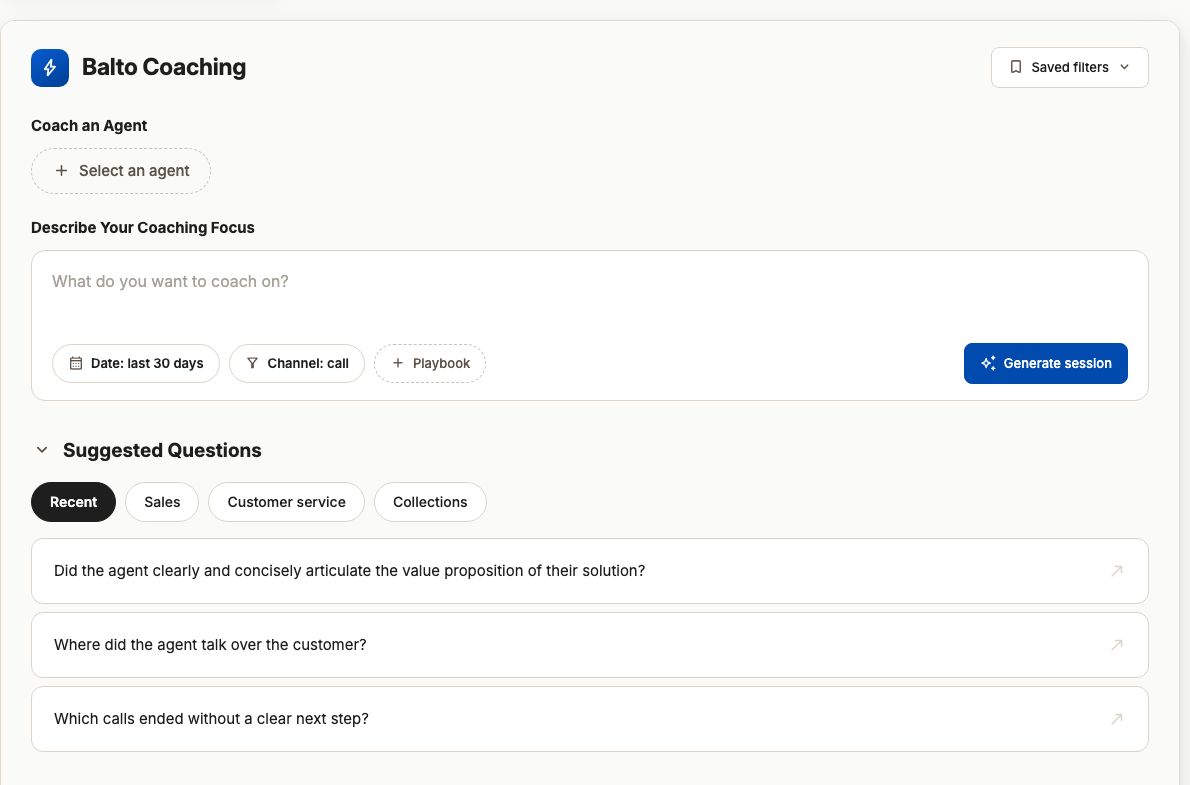
For the coaching session itself, a manager picks a rep, states a focus such as "handling price objections", and Balto builds the session from that rep's own calls. Playlists and sentiment filters surface the best and worst calls. Balto doesn't describe AI role-play, so the practice happens in the one-on-one and on the next calls.
Balto is built for contact centers in industries such as health insurance, banking and collections. That makes it a strong fit for inside sales floors that take or make hundreds of calls a day, and a poor fit for B2B account executives selling in video meetings.
- you run a high-volume phone sales floor on NICE, Genesys, RingCentral, Five9 or similar
- supervisors need to listen in and message reps during live calls
- your B2B team sells in Zoom or Teams meetings and wants role-play: Balto is built for phone-heavy contact centers
- you want a published price: Balto sells annual per-seat contracts by quote
- Users like
- Ease of use
- Users dislike
- Call bugs and vague AI suggestions
- Source: G2, 587 reviews
How it works in practice
Balto lists native integrations with NICE, Genesys, RingCentral, 8x8 and Convoso, and its integrations pages also name Five9, Dialpad, Zoom Phone and Contact Center, Salesforce and HubSpot. It writes call summaries and CRM notes automatically. On G2, reviewers praise ease of use; complaints mention call bugs, recording problems and AI suggestions that are vague.
- Starting price
- Quote only (per agent seat, annual)
- Telephony
- 60+ prebuilt integrations, no dialer included
- Live Listen
- Supervisor messages the rep while the customer can't hear
Coaching as a Program: Readiness Platforms
Readiness platforms combine training, AI role-play, certification and some call analysis in one system, so enablement can run coaching as a program across hundreds of reps. They're the right choice when you need to prove readiness at scale, although cost and rollout time are real hurdles: all three sell by quote, on multi-year terms in Allego's case.
Mindtickle
Best for enterprise readiness programs
Mindtickle is a sales readiness platform built around a Readiness Index: it combines training, AI role-play and call scoring to compare each rep with an ideal rep profile.
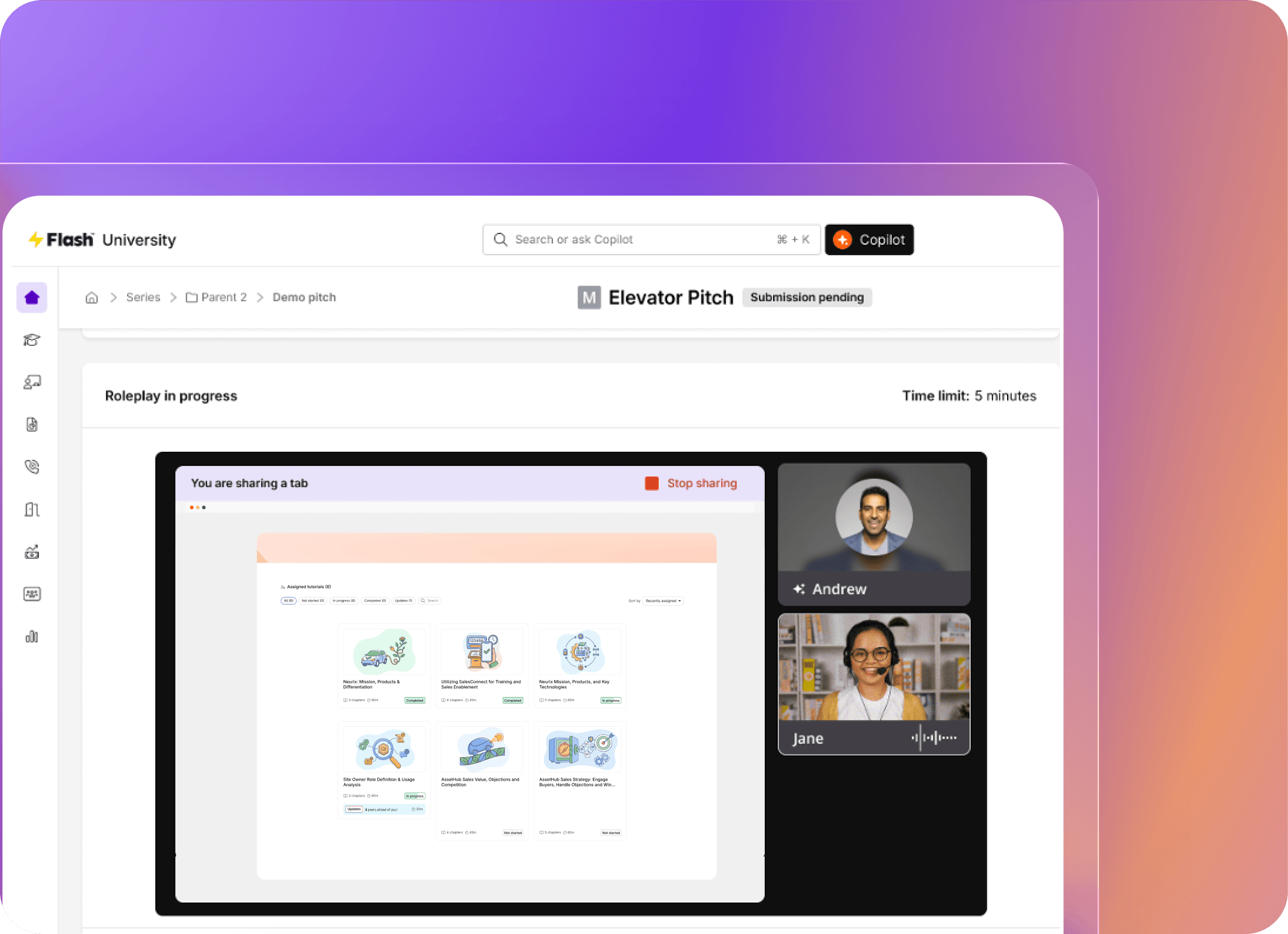
One coaching loop in Mindtickle. Call AI records and analyzes buyer calls and scores them. Where a rep falls short, the manager coaches on the skill gap and assigns an AI role-play: AI buyers raise objections and ask questions, and reps or enablement can build personas from a plain-language prompt, with a custom voice and personality. AI grades the role-play submissions at scale.
The proof step is Mindtickle's strength. The Readiness Index is the benchmark that ties learning, role-play skill and call behavior into one view per rep, so enablement can see who is ready for a new pitch and which skill holds a team back. Score thresholds on role-plays can certify reps.
But that breadth is also why it's more platform than many teams need. If you only want call scoring, a conversation intelligence tool is lighter.
- you need to prove that reps can say the new message, not only that they finished a course
- enablement runs certification across many teams and regions
- you want a self-serve trial or a published price: Mindtickle only offers demos
- you only need call scoring for one team: the platform covers training, content and readiness too
- Users like
- Training content and coaching
- Users dislike
- Slow loading in the asset hub
- Source: G2, 2,399 reviews
How it works in practice
Mindtickle says it has more than 100 integrations, and reps can reach coaching and content inside Salesforce. Pricing is by quote and packaging isn't published, so ask which modules your quote includes for role-play, Call AI and the Readiness Index. G2 reviewers highlight training content and coaching; a Capterra reviewer said the team kept finding workarounds to blend live and self-paced courses.
- Starting price
- Quote only (no public price list)
- Proof step
- Readiness Index per rep
- Role-play
- AI buyers with custom personas and voices
Allego
Best for multilingual video practice
Allego is a learning, coaching and content platform whose AI role-plays score every rep on the same rubric, with manager review and conversation intelligence for real calls.
One coaching loop in Allego. Conversation intelligence analyzes recorded calls or uploaded video for topics, pace, filler words and competitor mentions. A manager clips the moment that needs work and assigns an AI role-play built around it; the AI buyer adapts to the rep's answers. Every session gets structured AI feedback and a score against one coaching rubric applied across roles and regions.
Managers can add their own scores and compare attempts side by side, which keeps the human judgment in the loop. Skills dashboards show who is improving, which is the proof step.
Allego's role-play has a broad language range: according to Allego, it runs in 32 languages with 71 voices and accents and scores in 59. That matters for global teams that otherwise coach in English only.
- your team sells in several languages and needs role-play and scoring in them
- you want one rubric across managers so coaching doesn't depend on who your manager is
- you want a one-year pilot at low commitment: Allego says a three-year term paid annually is typical
- you need a named list of meeting and dialer integrations before you buy: the pages we read don't list them
- Users like
- Ease of use and interactive courses
- Users dislike
- Interface and layout limits
- Source: G2, 695 reviews
How it works in practice
Allego prices per user per month, billed annually upfront, with lower pricing for non-revenue roles and channel users. It offers an MCP server that connects approved content and deal intelligence to copilots such as Microsoft Copilot and Salesforce Einstein. G2 reviewers praise ease of use and interactive courses, and flag interface and layout limits; a TrustRadius reviewer wanted more customization.
- Starting price
- Quote only (per user per month, billed annually)
- Packaging
- AI Role Play and Modern Learning + Conversation Intelligence are separate per-user products
- AI
- Included at no extra charge, per Allego's pricing page
Highspot by Seismic
Best if coaching should live with your content
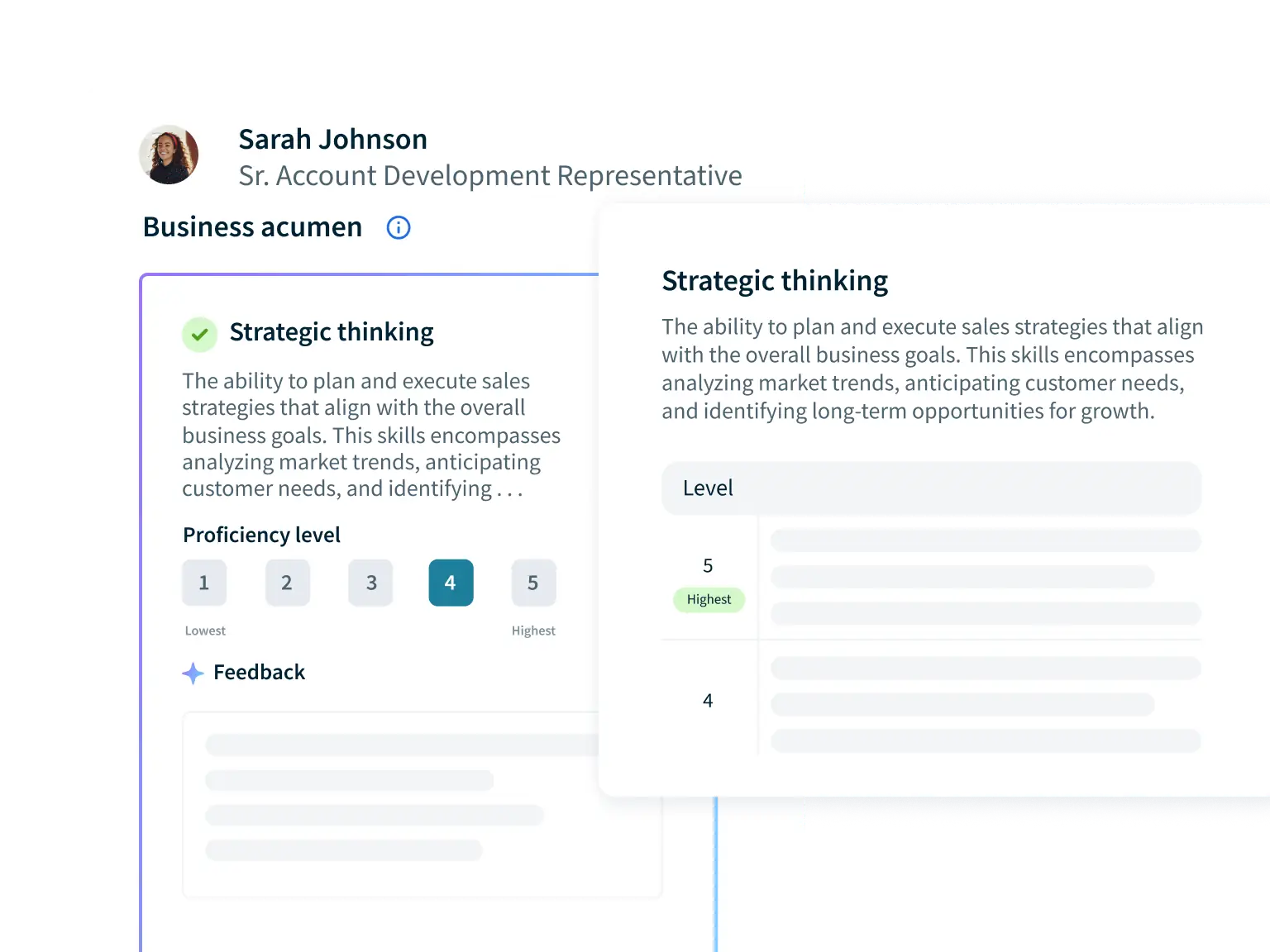
Highspot is an enablement platform, now part of Seismic, that adds meeting capture, AI role-play and scorecards tied to your own skill framework.
One coaching loop in Highspot. The Meeting Agent captures sales calls and links what happened to your skill framework. Managers add timestamped comments and rate reps on scorecards. The rep practices in an AI role-play with one or several AI buyers, such as a champion, a skeptic and an economic buyer in the same session, and gets feedback scored against your own competency framework. Scorecards and analytics across reps and teams show the change.
The package decides how much of that loop you get. Highspot's pricing page lists three tiers, Good, Better and Best, all by quote: role-play inside training starts at Better, and role-play for coaching, coaching analytics and scorecards are in Best.
Highspot and Seismic announced their merger on February 12, 2026, and Highspot now calls itself Highspot by Seismic. We didn't find a published combined roadmap or price list.
- your sales content and plays already live in Highspot and you want coaching next to them
- you want role-play graded on your own competency framework
- you'd buy the Good or Better tier for coaching: coaching analytics and scorecards are in Best
- you're about to sign a multi-year deal and want roadmap certainty after the Seismic merger
- Users like
- Ease of use
- Users dislike
- Learning curve and keeping content current
- Source: G2, 1,206 reviews
How it works in practice
Highspot lists more than 100 integrations, and the Best tier names Agentforce, Microsoft Copilot for Sales, Slack AI and an MCP server; role-plays can be created through the MCP server. G2 reviewers praise ease of use and content organization, and the common complaints are the learning curve and keeping content current.
- Starting price
- Quote only (Good, Better, Best packages)
- Coaching analytics and scorecards
- Best tier
- Role-play in training
- From the Better tier
Which Plan Unlocks the Coaching Features
Most quotes for coaching software grow because the features you saw in the demo sit in a higher tier or an add-on. Here's where each vendor puts them, according to its own pricing and help pages.
| Tool | Coaching feature | Plan that includes it (USD where published) |
|---|---|---|
| Gong | Scorecards, coaching inbox, coaching metrics | Enable Essentials or Enable plan, per Gong's help center |
| Gong | AI Trainer role-play, Dry Run, Lessons | Gong Enable |
| Avoma | AI call scoring, custom scorecards, coaching recommendations | Conversation Intelligence add-on ($29 per seat per month, billed annually) |
| Hyperbound | 45 prebuilt role-plays, example scorecards | Free |
| Hyperbound | Custom buyer bots, custom scorecards, reporting | Practice (quote) |
| Hyperbound | Real-call scoring, deal coaching, practice from calls | Perform (quote) |
| Dialpad Sell | Coaching Teams | Essentials ($39 per user per month) |
| Dialpad Sell | Live Coach real-time assist | Advanced ($59 per user per month) |
| Dialpad Sell | AI scorecards, playbooks, Coaching Hub | Premium ($79 per user per month) |
| Highspot | Role-play inside training | Better (quote) |
| Highspot | Role-play for coaching, coaching analytics, scorecards | Best (quote) |
| Allego | Role-play with coaching; conversation intelligence | Separate per-user products: AI Role Play, and Modern Learning + Conversation Intelligence |
| Chorus, Second Nature, Mindtickle, Balto | All coaching features | Packaging not published; ask for module names in the quote |
How Much Sales Coaching Software Costs
Published prices for sales coaching software run from about $19 to $79 per seat per month, and most enterprise platforms only quote. Two of the ten tools here publish a dollar price: Avoma's coaching add-on is $29 per seat per month billed annually ($35 monthly) on top of a recorder seat that starts at $19, and Dialpad Sell runs $39, $59 or $79 per user per month, with scorecards in the $79 tier.
Gong, Chorus, Second Nature, Balto, Mindtickle, Allego and Highspot sell by quote, and Hyperbound quotes its paid plans. "Quote only" usually means more than a seat price. Gong's pricing page says it charges per user plus a platform fee, and Allego says a three-year term paid annually is typical.
For a quick budget check: ten reps on Dialpad Sell Premium cost $790 a month at the listed price, or $9,480 a year, before any add-ons. Ask every quote-only vendor for the same ten-seat number with coaching included, so you compare like with like.
Is There Free Sales Coaching Software?
There's no free tool that covers the whole coaching loop, but you can test parts of it for free. Hyperbound's free plan includes 45 prebuilt AI role-plays with example scorecards, which is enough for an SDR team to see whether role-play practice sticks; it has no custom bots, reporting or real-call scoring. Avoma offers a 14-day trial of its Organization plan with add-ons enabled, so you can try AI call scoring on your own calls, and Dialpad offers a free trial of Sell Essentials.
A Weekly Coaching Cadence That Uses the Software
Buying the tool won't change behavior, but a weekly rhythm will. Here's a cadence that works with any of the conversation intelligence or role-play tools above. Gong's help center suggests starting with one scored call per rep per week, which is a sensible floor for any tool.
- Enablement leadPick one behavior to coach this month (for example, quantifying pain in discovery) and add it to the scorecard and one role-play scenario Start of the month
- SoftwareScore every recorded call against the scorecard and flag the lowest scores Daily, automatic
- ManagerReview one low-scoring call per rep, confirm or correct the AI score and mark one moment to work on Monday
- Manager and repFifteen-minute one-on-one on that moment; the rep does most of the talking Tuesday or Wednesday
- RepPractice the moment in an assigned role-play until the score clears the bar Within two days
- ManagerCheck whether the behavior shows up on the rep's next scored calls Friday
- Enablement leadRoll up scores by team and decide whether to keep or change the focus behavior End of the month
In the one-on-one, a common rule of thumb is the 70/30 rule: the rep talks about 70% of the time and the manager about 30%, mostly asking questions. Conversation intelligence tools make that easier because both of you are looking at the same moment in the call instead of debating what happened.
How to Tell If Coaching Is Working
Measure the behavior you coached before you measure revenue. Win rate and ramp time move slowly and depend on much more than coaching, so they make poor early signals. Use the software's own data as the leading indicator and keep the business metric as the lagging one. To build the win rate and ramp reports in your CRM or a BI tool, see our guide to sales analytics software.
| Kind of tool | Leading indicator (weeks) | Lagging indicator (quarters) |
|---|---|---|
| Conversation intelligence | Scorecard score on the coached behavior; share of calls where the step happens | Stage conversion after the coached call type (for example, discovery to next meeting) |
| AI role-play | Attempts until a rep passes; first-attempt score on new scenarios | Ramp time to first qualified opportunity for new reps |
| Real-time guidance | Playbook adherence per rep | Conversion per call or per connected dial |
| Readiness platform | Certification pass rate and Readiness Index change | Win rate on deals that use the new pitch |
Record a baseline
Before rollout, score four weeks of calls on the one behavior you'll coach. Without a baseline, every later score looks like progress.
Start with a pilot group
Roll the tool out to one or two teams and keep a comparable team on the old process. A staggered rollout is the cheapest way to separate the tool's effect from a good quarter.
Compare the leading indicator
After four to six weeks, compare scorecard scores on the coached behavior between pilot and comparison teams, using the same scorecard for both.
Decide on the lagging metric
Expand when the leading indicator moves and the stage conversion in the table above follows. If scores rise but conversion doesn't, you may be coaching the wrong behavior.
Tools We Looked at and Left Out
Several sales coaching tools came up in our research or on other lists but aren't ranked here. We left them out for the reasons below, not because they're bad products.
- Salesloft. Salesloft and Clari merged, and on September 2, 2026 Salesloft announced that it is now the single company and platform brand, with only Clari Forecast keeping the Clari name. Its conversation intelligence was relaunched as Salesloft Conversation Intelligence in July 2026 with live coaching cards and automatic call scoring. The product page we read doesn't describe scorecards or role-play yet, so we'll review it once the merged product settles. If you already run Salesloft, ask for a demo of the coaching features before adding another tool.
- Jiminny. Jiminny has coaching scorecards, manager flags on coachable moments and a Team Insights dashboard, but its pricing page doesn't publish prices or which plan includes which coaching feature, and we found only a small, partly older set of reviews.
- Fathom. G2's own list includes it for meeting insights and summaries. We kept this guide to tools built around scorecards and practice.
- Agentforce Sales Coach. Salesforce's AI coaching for Sales Cloud customers. It's worth a look if your team already runs Sales Cloud; we focused on tools you can add to any CRM.
- Methodology programs (Sandler, Richardson, Challenger). Instructor-led training is a different purchase. The software here reinforces whatever methodology you choose.
Coaching When the Product or Price Changes
Coaching tools score reps against a scorecard. When product or pricing changes, the scorecard, the role-play scenarios and the approved talk track all have to change first, and someone has to confirm the team knows the new message before they get scored on it. That gap sits before the coaching loop starts.
That's what we build at The GTM Lead. It sends one release brief with the approved messaging and a do-not-say list to your SDRs, AEs and CSMs; they acknowledge it and answer one quick check, so you see who's ready to explain the change before calls get scored. It doesn't record calls, score them or run role-plays, so it sits next to a coaching tool rather than replacing one.
FAQ
What is the best sales coaching software?
For most B2B teams that record their calls, <strong>Gong</strong> is the most complete choice, and <strong>Avoma</strong> is the best value with a published $29 per seat coaching add-on. For practice before live calls, <strong>Hyperbound</strong> suits SDR teams, and <strong>Mindtickle</strong> fits enterprise readiness programs that need certification.
How much does sales coaching software cost?
Sales coaching software costs about $19 to $79 per seat per month where vendors publish prices, and the eight other tools in this guide sell by quote. Budget for more than the seat: coaching add-ons, top tiers that hold the scorecards, platform fees and multi-year terms all raise the total.
Is there free AI sales coaching software?
Yes, for role-play practice: Hyperbound has a free plan with 45 prebuilt AI role-plays. For AI call scoring there is no free plan in this guide, only trials such as Avoma's 14 days.
Can AI replace a sales manager's coaching?
AI can't replace a sales manager's coaching. It can score every call, suggest scorecard answers and run unlimited role-plays, which removes most of the listening time. A manager still decides which behavior matters, checks whether the AI scored a call fairly and runs the one-on-one where the rep commits to a change.
What's the difference between sales coaching and sales training software?
Training software teaches reps what to say through courses and content. Coaching software checks what they actually say on calls or in role-plays and helps them fix the gap. Readiness platforms such as Mindtickle, Allego and Highspot combine both.
What is the 70/30 rule in sales coaching?
It's a rule of thumb for coaching conversations: the rep talks about 70% of the time and the manager about 30%, mostly by asking questions. It keeps the rep thinking through the fix instead of listening to a lecture.